Sophia
Dreaming of building long-term wealth and generating passive income, but the world of real estate investing feels like a private club you weren’t invited to? You’re not alone. For many, the idea of buying an investment property seems complex, expensive, and reserved for the pros.
But here’s the truth: it doesn’t have to be.
This guide is designed to demystify the entire process. We will break down how to invest in real estate as a beginner into simple, actionable steps. Whether you have thousands of dollars saved or just a few hundred to start, there is a path for you. By the end of this article, you’ll have a clear roadmap to begin your journey toward financial freedom through real estate.
Why Invest in Real Estate? The 4 Key Benefits
Before we get into the “how,” let’s solidify the “why.” Understanding the unique advantages of real estate is crucial for staying motivated on your journey. It’s more than just buying a house; it’s about acquiring a powerful wealth-building asset.
Build Passive Income Through Cash Flow
This is the number one reason most people get started in real estate investing. Cash flow is the profit you have left over each month from your rental income after you’ve paid all the expenses—mortgage, taxes, insurance, and repairs. A positive cash-flowing property puts money in your pocket every single month without you having to trade your time for it.
Property Appreciation and Equity
Over time, real estate has historically trended upward in value. This increase is called appreciation. As the property value grows and you pay down your mortgage, your equity—the portion of the property you truly own—builds automatically. It’s like a forced savings account that grows on its own.
Significant Tax Advantages
Real estate investors enjoy some of the best tax benefits available. The government allows you to deduct numerous expenses, including mortgage interest, property taxes, insurance, and repair costs. The most powerful benefit is depreciation, which allows you to deduct a portion of your property’s value from your taxable income each year, even if the property is appreciating. (Always consult a tax professional to maximize these benefits).
A Hedge Against Inflation
When the cost of goods and services goes up (inflation), the value of your real estate and the amount you can charge for rent tend to rise as well. While the cash in your savings account loses purchasing power, your real estate asset helps protect your wealth by growing alongside inflation.
Step 1 – Assess Your Finances and Set Clear Goals
You can’t build a strong house on a shaky foundation. The same is true for your investment portfolio. Before you even look at a property listing, you need to get your financial house in order.
Determine Your Investment Budget
Be brutally honest with yourself about what you can afford. This involves more than just a down payment. You’ll need to save for:
- Down Payment: Typically 20-25% for a conventional investment property loan, but as low as 3.5% for strategies like house hacking.
- Closing Costs: These are fees for services like appraisals, inspections, and title insurance, usually running 2-5% of the purchase price.
- Cash Reserves: This is non-negotiable. You need an emergency fund of at least 3-6 months of total expenses (mortgage, taxes, insurance, etc.) set aside for unexpected repairs, vacancies, or other emergencies.
Check and Improve Your Credit Score
Your credit score is your financial report card. Lenders use it to determine your reliability and, most importantly, the interest rate they’ll offer you. A higher score means a lower interest rate, which can save you tens of thousands of dollars over the life of a loan. Aim for a score of 740 or higher to get the best rates, but many loans are available for scores in the 600s.
Define Your “Why”
What do you want to achieve with real estate? Your goals will determine your strategy.
- Are you looking to generate an extra $500 a month to cover your car payment?
- Do you want to build a large portfolio to replace your 9-to-5 income in 10 years?
- Are you investing for long-term appreciation to fund your retirement?
A first-time real estate investor with a clear goal is far more likely to succeed.
Step 2 – Choose Your Real Estate Investment Strategy

There is no one-size-fits-all approach to real estate for beginners. Your budget, risk tolerance, and time commitment will guide you to the right strategy. Let’s break them down from the most passive to the most hands-on.
The Hands-Off Approach (Great for Small Budgets)
- REITs (Real Estate Investment Trusts): This is the easiest way to get started. REITs are companies that own (and often operate) income-producing real estate. You can buy shares of a publicly-traded REIT on the stock market, just like you would with Apple or Google stock. It’s a fantastic way to get diversification and earn dividends with as little as $10. This is the definition of REITs for beginners.
- Real Estate Crowdfunding: Platforms like Fundrise and CrowdStreet allow you to pool your money with other investors to buy a piece of a large commercial or residential project. You can often start with just a few hundred or a few thousand dollars and let professionals manage the entire process.
The Hands-On Approach (Direct Property Ownership)
Traditional Rental Properties: This is the classic buy-and-hold strategy. You purchase a single-family home, duplex, or condo and rent it out to tenants. Your goal is to generate monthly cash flow while the property appreciates over time.
House Hacking: This is arguably the best strategy for a beginner with limited funds. You buy a multi-unit property (like a duplex, triplex, or fourplex), live in one unit, and rent out the others. The rent from your tenants can significantly reduce or even eliminate your housing costs, allowing you to live for free while building equity in an appreciating asset. Because you are owner-occupying, you can qualify for low-down-payment loans like an FHA loan (3.5% down).
The BRRRR Method: This advanced strategy stands for Buy, Rehab, Rent, Refinance, Repeat. You buy a distressed property below market value, renovate it to increase its value, rent it out to a tenant, and then do a “cash-out” refinance to pull your initial investment back out. You can then use that money to repeat the process. It’s a powerful way to scale quickly but requires more knowledge and effort.
Fix-and-Flip: Popularized by TV shows, this involves buying a property, renovating it quickly, and selling it for a profit. This is less of a passive investment and more of an active business. It carries higher risk but can offer fast returns if you know your market and manage your budget perfectly.
Step 3 – Understanding and Managing the Risks of Real Estate Investing
Every investment carries risk, and real estate is no exception. A smart investor doesn’t avoid risk—they understand it and plan for it.
- Market Risk: Economic downturns can impact property values. The best defense is to buy for long-term cash flow, not short-term appreciation. If the property pays for itself every month, you can weather any market storm.
- Vacancy Risk: There will be times when you don’t have a tenant. Your cash reserves are your safety net here, ensuring you can still pay the mortgage until you find a new, qualified tenant.
- Tenant Risk: Dealing with bad tenants is a landlord’s biggest headache. Mitigate this with a thorough screening process: run background checks, credit reports, and always call their previous landlords.
- Liquidity Risk: You can’t sell a house in an afternoon. If you need cash fast, real estate isn’t the best place for it. Be prepared to hold your properties for the long term.
- Maintenance Risk: A new roof or a broken furnace can cost thousands. Factor in a budget for both regular maintenance (5-10% of monthly rent) and large capital expenditures over time.
Step 4 – Build Your A-Team – The Professionals Every Beginner Needs
You don’t have to be an expert in everything. Successful real estate investing is a team sport. As the CEO of your investment portfolio, your job is to assemble a team of pros.
The Investor-Friendly Real Estate Agent: This is not just any agent. You need someone who understands the local market from an investor’s perspective. They should be sending you deals, helping you analyze numbers, and have a network of contacts.
The Mortgage Broker or Lender: A great broker can be your key to how to finance an investment property. They have access to dozens of loan products and can help you find the best terms for your specific situation.
The Home Inspector: This person is your safeguard against buying a money pit. A thorough inspection will uncover hidden issues that could cost you tens of thousands down the road. Never skip this step.
The Real Estate Attorney or Title Company: They ensure your transaction is legally sound, the title is clear of any claims (liens), and the closing process goes smoothly.
The CPA or Tax Advisor: A CPA who is savvy about real estate can save you a fortune. They will help you structure your investments correctly and take advantage of every tax deduction you’re entitled to.
Step 5 – Secure Your Financing
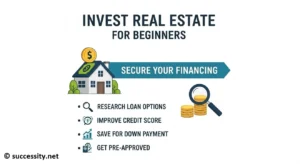
Unless you’re paying in cash, you’ll need a loan. Understanding your financing options is a critical step in getting started in real estate investing.
- Conventional Mortgages: These are the most common loans for investment properties. You will typically need a credit score of 620 or higher and a down payment of at least 20-25%.
- FHA Loans: Insured by the Federal Housing Administration, these loans are perfect for house hacking. They allow for down payments as low as 3.5% but require you to live in the property for at least one year.
- VA Loans: If you are an eligible veteran or active-duty service member, this is the best loan available. It requires 0% down and has excellent interest rates. It can also be used for house hacking a multi-unit property.
- HELOC (Home Equity Line of Credit): If you already own a primary residence with significant equity, you can take out a line of credit against it to fund the down payment on an investment property.
Step 6 – How to Find and Analyze an Investment Property
Now for the fun part: finding a deal. The key is to analyze properties like an investor, not a homebuyer. Emotions have no place here; it’s all about the numbers.
Where to Find Deals
- The MLS (Multiple Listing Service): This is the database all real estate agents use. Your investor-friendly agent can set up alerts for properties that meet your criteria.
- For-Sale-By-Owner (FSBO) Sites: Websites like Zillow often have listings directly from owners, which can sometimes present an opportunity.
- Driving for Dollars: This old-school method still works. Drive through neighborhoods you’re interested in and look for homes that appear distressed or vacant. You can then look up the owner and reach out to them directly.
The Numbers Don’t Lie – Key Metrics for Beginners
- The 1% Rule: A quick screening tool. Does the property’s monthly rent equal at least 1% of the purchase price? (e.g., a $200,000 property should rent for at least $2,000/month). If it does, it’s worth a deeper look.
- Cash Flow: This is your ultimate goal. The formula is simple: Monthly Rental Income – Total Monthly Expenses = Monthly Cash Flow. Your expenses must include the mortgage payment, property taxes, insurance, vacancy savings, and maintenance reserves.
- Cash-on-Cash Return: This metric tells you how hard your money is working for you. The formula is: (Annual Cash Flow / Total Cash Invested) x 100. A return of 8-12% or higher is generally considered a good deal.
Performing Due Diligence
Once your offer is accepted, the real work begins. During your due diligence period, you must verify everything. This includes the professional home inspection, reviewing tenant leases, confirming market rents, and getting a title search.
Step 7 – Managing Your First Investment Property
Congratulations, you have the keys! But the work isn’t over. Proper management is what separates a profitable investment from a nightmare.
The Big Decision – Self-Manage or Hire a Property Manager?
- DIY Landlording: If you live nearby, have a flexible schedule, and are handy, self-management can save you money and give you total control. However, you’ll be the one fielding calls about leaky faucets at 2 a.m.
- Hiring a Property Manager: A good property manager handles everything: marketing, tenant screening, rent collection, and maintenance coordination. They typically charge 8-12% of the monthly rent, but their expertise can save you time, stress, and costly mistakes.
Core Responsibilities of a Landlord
Whether it’s you or a manager, these tasks are essential:
- Marketing the property and screening tenants thoroughly.
- Creating and enforcing a legally-sound lease agreement.
- Collecting rent on time.
- Handling all maintenance and repair requests promptly.
- Understanding and complying with local and federal landlord-tenant laws.
Common Mistakes First-Time Real Estate Investors Make

- Mistake #1: Underestimating Expenses: Forgetting to budget for capital expenditures like a new roof or HVAC is a recipe for disaster.
- Mistake #2: Not Having Enough Cash Reserves: A single vacancy or large repair can wipe you out if you don’t have a dedicated emergency fund for the property.
- Mistake #3: Forgetting It’s a Business: Getting emotionally attached to a property can lead you to over-improve it or hesitate to raise rents when necessary.
- Mistake #4: Trying to Do Everything Alone: Don’t be afraid to lean on your team of professionals. Their advice is worth its weight in gold.
Your Real Estate Journey Starts Now
Getting started in real estate investing might seem like a mountain to climb, but you ascend it one step at a time. The path is clear: build a solid financial foundation, choose a strategy that aligns with your goals, build a team of experts, learn how to analyze the numbers, and never stop educating yourself.
The first step isn’t buying a property—it’s creating your plan. Start today by assessing your budget and exploring the strategies that fit your life. Your future self will thank you.
Answering Your Top Questions (FAQ)
How much money do I really need to start investing in real estate?
It varies wildly. You can buy a REIT share for under $50. For physical property, you could get into a house-hack deal with an FHA loan for as little as 3.5% down, which might be $10,000 to $20,000 depending on the home price.
What is the easiest way for a beginner to invest in real estate?
Without a doubt, the easiest and most passive methods are investing in REITs or using a real estate crowdfunding platform. They require the least amount of capital and no management effort on your part.
Is buying a rental property a good idea for a beginner?
Yes, it can be an excellent idea if you are financially prepared and have done your homework. A traditional rental or a house hack is a phenomenal way to build wealth, but it requires more upfront work and capital than passive methods.
Is real estate better than stocks for a beginner?
They are different tools for different jobs. Stocks offer liquidity and simplicity, while real estate offers cash flow, tax advantages, and the ability to use leverage (a loan) to control a large asset. The best strategy for most people is to have a diversified portfolio that includes both.
About the Author