Sophia
Does it feel like your paycheck vanishes the moment it hits your account? You’re not alone. Between rising grocery prices, stubborn utility bills, and the cost of simply living, it’s easy to feel like you’re constantly treading water financially. The good news is that you have more control than you think.
Taking charge of your finances isn’t about extreme deprivation or giving up everything you love. It’s about being intentional. This guide provides a clear, actionable roadmap to help you reduce monthly expenses, create some breathing room in your budget, and finally start making progress toward your financial goals. Let’s dive in.
The Foundation – Before You Cut, You Must Track
You can’t fix a leak if you don’t know where it’s coming from. The first, non-negotiable step to cutting your spending is to get a crystal-clear picture of where your money is actually going. This isn’t about judging your past purchases; it’s about gathering data to make smarter decisions moving forward.
Step 1 – Create a Simple Budget
The word “budget” can sound intimidating, but it doesn’t have to be. Think of it as a simple plan for your money. A great place to start is the 50/30/20 rule:
- 50% for Needs: This covers your absolute essentials—rent/mortgage, utilities, groceries, transportation, and insurance.
- 30% for Wants: This is the fun stuff—dining out, hobbies, streaming services, and shopping.
- 20% for Savings & Debt Repayment: This is for your future, whether it’s building an emergency fund, saving for retirement, or paying down high-interest debt.
To make this even easier, consider using a budgeting app like YNAB or Mint, or simply download a free spreadsheet template to get started. The tool doesn’t matter as much as the habit of creating a budget.
Step 2 – Track Your Spending for 30 Days
For one full month, track every single dollar you spend. Every coffee, every subscription renewal, every impulse buy at the checkout counter. At the end of the month, categorize your spending and compare it to your 50/30/20 goals. You’ll likely be surprised to discover the “spending leaks”—those small, frequent purchases that add up to a significant amount over time.
The “Big Three” – Targeting Your Largest Expenses
To make the biggest impact on your budget, start with your three largest spending categories: housing, transportation, and food. A small percentage cut here is worth more than eliminating dozens of tiny expenses.
Strategy 1 – Lower Your Housing Costs
- For Homeowners: Your mortgage is a fixed cost, but the expenses around it aren’t. Shop around for homeowner’s insurance annually; loyalty rarely pays off. You can often save hundreds by switching providers. Also, consider refinancing your mortgage if interest rates have dropped since you bought your home.
- For Renters: Don’t assume your rent is non-negotiable. If you’ve been a great tenant, ask your landlord if they’d consider a smaller increase (or none at all) at renewal time. In the long term, consider if getting a roommate or moving to a more affordable neighborhood could drastically lower your bills.
- Save on Utilities: Conduct a simple home energy audit. Check for drafts around windows and doors, and switch to LED lightbulbs. These small changes can chip away at your electricity bill.
Strategy 2 – Cut Transportation Spending
- Slash Your Car Insurance: This is one of the easiest ways to save money. Get quotes from at least three different insurance companies each year. Ask about discounts for safe driving, bundling with home/renter’s insurance, or having a good student on your policy.
- Improve Fuel Efficiency: Simple maintenance like keeping your tires properly inflated can improve your gas mileage. Drive smoothly, avoid rapid acceleration and braking, and combine errands into a single trip to save on fuel.
- Rethink Your Commute: Could you carpool with a coworker twice a week? Is public transit an option? If you live close enough, biking or walking not only saves money but is great for your health.
Strategy 3 – Slash Your Grocery & Dining Bill
This is where mindful habits can save you hundreds of dollars every month.
- Meal Plan Relentlessly: This is the golden rule of saving money on groceries. Before you go to the store, plan out your meals for the week. Check what you already have in your pantry and build your list around sales flyers.
- Shop with a List (and Stick to It): A list is your best defense against impulse buys. Go to the store after you’ve eaten, not when you’re hungry and everything looks delicious.
- Embrace Store Brands: In blind taste tests, people often can’t tell the difference between name brands and their generic counterparts. Give store brands a try on staples like pasta, canned goods, and cleaning supplies. The savings add up fast.
- Limit Eating Out: Set a realistic goal. If you currently buy lunch every day, start by packing a lunch three times a week. If you eat out for dinner frequently, limit it to a special occasion once a week.
Quick Wins – How to Reduce Monthly Bills & Subscriptions
Ready for some instant gratification? These recurring charges are often easy to reduce with a single action.
- Audit Your Subscriptions. Go through your bank statement line by line and highlight every recurring charge. Streaming services, gym memberships you don’t use, app subscriptions—be ruthless. Use an app like Rocket Money to help you identify them. Your challenge: Cancel at least one today.
- Negotiate Your Bills. You’d be amazed what a polite phone call can accomplish.
- Cable/Internet: Call the customer service line and tell them you are considering switching due to high costs. Ask to be transferred to the “retention” or “loyalty” department. They have the power to offer you discounts and promotions that regular agents don’t.
- Cell Phone: Are you paying for more data than you use? Check your usage and switch to a cheaper plan. Consider moving to a lower-cost carrier like Mint Mobile or Visible, which often use the same networks as the major providers for a fraction of the price.
- Lower Your Utility Bills. Unplug electronics when not in use to stop “vampire power” drain. Adjust your thermostat by a couple of degrees—up in the summer, down in the winter. Wash your clothes in cold water whenever possible.
Smart Lifestyle Adjustments for Frugal Living

Reducing your expenses is also about shifting your mindset and habits. These frugal living tips focus on conscious consumption rather than deprivation.
- Master the 30-Day Rule for Big Purchases. See a new gadget or piece of clothing you want? Instead of buying it on impulse, write it down and wait 30 days. After a month, the urge to buy it has often faded. If you still want it and it fits in your budget, you can buy it guilt-free.
- Find Free or Low-Cost Entertainment. Fun doesn’t have to be expensive. Explore your local library for books, movies, and even free museum passes. Go for a hike, have a picnic in a park, or host a potluck or board game night with friends instead of going out.
- DIY Instead of Buying New. Before you throw something away or hire someone, ask yourself: “Can I fix this?” Learning simple skills like mending a shirt, fixing a leaky faucet with a YouTube tutorial, or making your own all-purpose cleaner can save you a surprising amount of money.
- Embrace Secondhand Shopping. From thrift stores for clothing to Facebook Marketplace for furniture, buying used is great for your wallet and the planet. You can find high-quality items for a fraction of their original cost.
Mastering the Mindset – The Psychology Behind Saving Money
Successfully reducing your expenses is more than just a math problem; it’s a behavioral challenge. Our spending habits are deeply tied to our emotions, habits, and social pressures. If you only focus on the numbers without addressing your mindset, you’re likely to fall back into old patterns.
Identify Your Spending Triggers
Take a moment to think about why you spend. Is it boredom on a Friday night? Stress after a long day at work? The desire to keep up with friends on social media? Recognizing your triggers is the first step to disarming them. When you feel the urge to make an impulsive purchase, pause and ask yourself, “What am I really feeling right now?” Often, you can find a free or low-cost way to address that feeling, like going for a walk to de-stress or calling a friend when you’re feeling lonely.
Ditch the “All-or-Nothing” Mentality
One of the biggest reasons people fail at budgeting is that they make it too restrictive. A budget is not a financial prison. If you cut out every single thing you enjoy, you’re going to burn out and give up. The key is balance. Intentionally include a “fun money” or “guilt-free spending” category in your budget, even if it’s just a small amount. This gives you the freedom to buy a coffee or see a movie without derailing your entire plan. Progress, not perfection, is the goal.
Redefine “Frugal” as “Resourceful”
The word “frugal” often has a negative connotation of being cheap or deprived. Let’s reframe that. Being frugal is about being resourceful. It’s about being smart and creative enough to get the maximum value and enjoyment out of your money. It’s choosing to spend intentionally on what truly matters to you by consciously cutting back on the things that don’t.
Planning Ahead – How to Avoid Budget-Busting Surprise Expenses
Have you ever had a great month with your budget, only to have it completely wrecked by a $500 car repair or an annual insurance premium? These aren’t truly “surprises”—they are irregular but predictable expenses. The best way to handle them is to plan for them.
The Power of Sinking Funds
A sinking fund is a simple yet brilliant strategy: you save a small amount of money each month for a specific, future expense. By breaking a large cost down into manageable monthly chunks, you remove its power to derail your finances.
- Example: Your annual car insurance is $600, due every June. Instead of panicking in May, you create a sinking fund. You divide $600 by 12 months, which equals $50. Every month, you set aside $50 into a separate savings account labeled “Car Insurance.” When the bill comes, the money is already there waiting. No stress, no debt.
Key Sinking Funds Everyone Should Consider
Think about all the large, non-monthly expenses you have throughout the year and start a sinking fund for them. Common ones include:
- Car Maintenance & Repairs: For new tires, oil changes, and unexpected fixes.
- Home Maintenance: For when the water heater breaks or you need a plumber.
- Gifts: For holidays, birthdays, and anniversaries.
- Vacations: Saving for a trip is much more enjoyable than paying it off afterward.
- Annual Subscriptions: For services like Amazon Prime or warehouse club memberships.
Getting Your Household on Board – Saving Money as a Team
It’s tough to make financial progress if you and your partner (or family) aren’t on the same page. Disagreements about money are a leading cause of stress in relationships. But when you work together as a team, you can achieve your goals much faster and strengthen your bond in the process.
Schedule a “Money Date”
Don’t try to have a serious financial discussion when you’re tired, stressed, or in the middle of an argument. Instead, schedule a “money date.” Make it a positive, low-pressure event. Grab a coffee or a glass of wine, put away your phones, and create a judgment-free zone to talk about your finances. Start by talking about your dreams and what you want to achieve together.
Align on Shared Financial Goals
It’s much easier to cut spending when you have a clear and exciting “why.” Are you trying to save for a down payment on a house? Pay off your student loans to achieve freedom? Plan an unforgettable family vacation? When you have a shared goal that you’re both passionate about, trimming the grocery budget or skipping takeout feels less like a sacrifice and more like a strategic step toward something wonderful.
Tackling Debt – Stop the Interest Drain
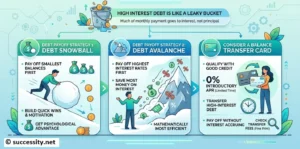
High-interest debt—especially from credit cards—is like a hole in your financial bucket. A significant portion of your monthly payment is eaten up by interest, not by paying down what you actually owe.
- Choose a Debt Payoff Strategy. Two popular methods are:
- The Debt Snowball: You pay off your debts from the smallest balance to the largest, regardless of interest rate. This method gives you quick psychological wins, building momentum and motivation.
- The Debt Avalanche: You pay off your debts from the highest interest rate to the lowest. Mathematically, this method will save you the most money on interest over time.
- Consider a Balance Transfer Card. If you have good credit, you may qualify for a credit card offering a 0% introductory APR on balance transfers. This allows you to transfer your high-interest debt and pay it down for several months without any interest accruing. Just be sure to read the fine print about transfer fees.
Beyond Cutting – Increase Your Income
While cutting spending is powerful, it’s only half of the financial equation.
- Ask for a Raise. Research what your position pays in your industry and geographic area. Document your accomplishments and schedule a meeting with your boss to discuss your compensation.
- Start a Side Hustle. Use your skills to earn extra income. This could be anything from freelancing, pet sitting, or driving for a ride-share service.
- Sell Unused Items. Go through your closets, garage, and storage areas. That old furniture, electronics, or clothing could be turned into cash on platforms like Facebook Marketplace or Poshmark.
Final Thoughts – Your First Step Starts Now
Reading this list can feel overwhelming, but you don’t have to do everything at once. The key to successfully reducing your monthly expenses is to start small and build momentum.
The journey begins with a single step. Pick just ONE tip from this list and implement it this week. Maybe it’s canceling a subscription. Maybe it’s planning your meals. Or maybe it’s making that phone call to your internet provider.
Take that first step. You’ll be surprised at how quickly these small, consistent changes add up to significant savings and a greater sense of financial peace.
Frequently Asked Questions (FAQ)
What’s the fastest way to reduce monthly expenses?
Start by auditing and canceling unused subscriptions. Next, place a 30-day pause on all non-essential spending like dining out, entertainment, and shopping for wants.
Where should I start cutting costs for the biggest impact?
Focus on the “Big Three”: housing, transportation, and food. Lowering your car insurance or cutting your grocery bill by 10% saves much more than eliminating one small subscription.
How does the 50/30/20 budget rule work?
It’s a simple guideline for your after-tax income. You allocate 50% to needs like rent, 30% to wants like hobbies, and dedicate 20% to savings and paying off debt.
What is the most effective tip for saving on groceries?
The single most effective strategy is meal planning. Plan your week’s meals based on what’s on sale and what you already have, then create a strict shopping list and stick to it.
How can I stop surprise expenses from wrecking my budget?
Use sinking funds for predictable but irregular costs. By saving a small, dedicated amount each month for things like car repairs or holiday gifts, the money is ready when you need it.
About the Author