Sophia
Feeling like you’re drowning in debt? You’re not alone. The weight of credit card statements, loan payments, and looming bills can be incredibly stressful, making it feel impossible to get ahead. But here’s the good news: there is a clear, manageable path forward. You can take control of your finances.
This guide isn’t about quick fixes or unrealistic promises. It’s a comprehensive blueprint packed with actionable debt management tips designed to help you understand your situation, build a solid plan, and start your journey toward a debt-free life. Whether you’re just starting to feel the pressure or you’ve been struggling for years, these steps will help you regain control and improve your financial health.
Let’s get started.
The Foundation – Understand Your Financial Picture
You can’t win a game if you don’t know the score. The first, most crucial step in any debt management journey is to get a crystal-clear understanding of exactly where you stand. It might feel scary, but this clarity is power.
Before You Can Manage Debt, You Must Measure It
Tip 1 – Gather All Your Financial Documents
It’s time for a financial scavenger hunt. Go through your files, emails, and that pile of mail on the counter. You need to collect a statement for every single debt you owe. This includes:
- Credit card statements
- Student loan agreements
- Car loan details
- Mortgage or rent statements
- Personal loans or lines of credit
- Medical bills
- Any “buy now, pay later” accounts (like Afterpay or Klarna)
Actionable Step: Create a simple spreadsheet (or use a notebook) with four columns: Creditor Name, Total Balance, Interest Rate (APR), and Minimum Monthly Payment. This master list is your new map.
Tip 2 – Calculate Your Total Debt & Debt-to-Income Ratio (DTI)
Once your list is complete, add up the “Total Balance” column. That’s your total debt number. Seeing it in black and white can be a shock, but it’s a necessary one.
Next, calculate your Debt-to-Income (DTI) ratio. This is a key metric lenders use, and it tells you what percentage of your monthly income goes toward debt payments.
Simple DTI Formula:
(Total Monthly Debt Payments / Gross Monthly Income) x 100 = DTI %
For example, if your total minimum payments are $1,500 and your gross monthly income is $5,000, your DTI is 30%. Knowing this helps you understand your financial risk level and how lenders see you.
Mind Over Money – The Psychology of Getting Out of Debt
Before we dive into the mechanics of repayment plans, let’s address the elephant in the room: the emotional weight of debt. Debt isn’t just a numbers problem; it’s a heavy burden that can impact your mental health, relationships, and overall well-being. Mastering your money means mastering your mindset first.
Acknowledge Your Feelings, But Don’t Dwell on Them
It’s completely normal to feel shame, anxiety, or even anger about your debt. The first step is to acknowledge these feelings without judgment. You are not a bad person because you have debt. However, dwelling on these negative emotions can lead to paralysis. The goal is to transform that emotional energy into motivation. You’ve already taken the biggest step by deciding to face it head-on.
Define Your “Why”
Why do you want to be debt-free? The answer isn’t just “to have more money.” Get specific.
- Is it to finally sleep through the night without financial anxiety?
- To save for a down payment on a house?
- To have the freedom to travel or change careers?
- To provide a more secure future for your family?
Write your “Why” down on a sticky note and put it on your bathroom mirror or computer monitor. When you feel discouraged, this personal, powerful reason will be the fuel that keeps you going. This is the key to staying motivated to pay off debt.
Celebrate the Small Wins
Looking at a total debt of $50,000 can feel defeating. Instead, break it down into micro-goals. Your goal this month isn’t to pay off $50,000; it’s to pay an extra $75 on your credit card. Or maybe it’s just to make it through the week without any non-essential spending. When you hit one of these small goals, celebrate it! Acknowledge your progress. This creates a feedback loop of positive reinforcement that makes the long journey feel manageable and rewarding.
Core Strategies – Your Debt Management Playbook
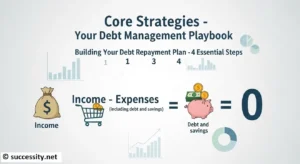
With a clear picture of your debt and a motivated mindset, you can now build your plan of attack. These are the fundamental debt reduction strategies that form the backbone of any successful journey to get out of debt.
Building Your Debt Repayment Plan – 4 Essential Steps
Tip 3 – Create a Realistic Zero-Based Budget
A budget is not about restriction; it’s about control. A zero-based budget is a simple but powerful concept: give every single dollar of your income a job.
Income – Expenses (including debt and savings) = 0
This forces you to be intentional with your money. You’ll see exactly where your cash is going and identify areas where you can cut back. Use an app like YNAB or Mint, or a simple spreadsheet. This is the single most effective tool to start a budget and stick to it so you can manage credit card debt and other expenses efficiently.
Tip 4 – Choose Your Repayment Method – Debt Snowball vs. Avalanche
This is where you decide how you’ll tackle your list of debts. The two most popular and effective methods are the Debt Snowball and the Debt Avalanche.
- The Debt Snowball Method: You focus all your extra money on paying off the smallest debt first, regardless of the interest rate, while making minimum payments on everything else. Once the smallest debt is gone, you roll that payment amount into the next smallest debt. This creates a “snowball” effect.
- Best for: People who need quick, motivational wins to stay on track. The psychological boost of clearing a debt is powerful.
- The Debt Avalanche Method: You focus all your extra money on the debt with the highest interest rate first, while making minimum payments on the rest. Once that high-interest debt is gone, you attack the next highest.
- Best for: People who want to save the most money on interest over time. Mathematically, this is the most efficient way to pay off debt fast.
Which is right for you? The best plan is the one you’ll stick with. If motivation is your biggest challenge, the Snowball is fantastic. If you’re driven by numbers and efficiency, the Avalanche is your best bet.
Tip 5 – Build a Starter Emergency Fund ($1,000)
This might sound counterintuitive. Why save money when you’re trying to pay off debt? Because life happens. The car will break down. The water heater will leak. Without a small cash cushion, these unexpected expenses will force you to reach for a credit card, adding more debt and undoing your progress.
Pause your aggressive debt repayment just long enough to create an emergency fund of $1,000. This is your buffer against life’s little disasters.
Tip 6 – Stop Accruing New Debt
This is non-negotiable. To get out of a hole, you have to first stop digging.
- Pause using your credit cards. You can store them somewhere safe or even freeze them in a block of ice if you need to.
- Commit to not taking on any new personal loans or financing.
- Switch to using a debit card or cash to ensure you’re only spending money you actually have and are living below your means.
Powerful Tactics to Pay Off Debt Faster
Once your foundational plan is in place, it’s time to pour fuel on the fire. Finding extra money is the key to accelerating your journey to financial freedom.
How to Find Extra Money for Your Debt
Tip 7 – Aggressively Cut Expenses
Go through your budget with a fine-tooth comb. This is a temporary sacrifice for a massive long-term gain. Look for areas to cut:
- Subscriptions: Cancel streaming services you don’t use, gym memberships, and subscription boxes.
- Food: Slash your dining-out budget, brew coffee at home, and master the art of meal prepping.
- Shopping: Implement a 30-day waiting period for any non-essential purchase.
- Bills: Call your cell phone, cable, and insurance providers to negotiate a lower rate.
Every dollar you save is another dollar you can throw at your debt.
Tip 8 – Increase Your Income
While cutting expenses is crucial, there’s a limit to how much you can cut. There’s no limit to how much you can earn. Consider:
- Asking for a raise at your current job if you’ve been a high performer.
- Taking on a side hustle: You can explore the benefits of a side hustle by driving for a rideshare service, delivering food, doing freelance work online, or walking dogs in your neighborhood.
- Selling unused items: Go through your home and sell clothes, electronics, and furniture you no longer need on platforms like Facebook Marketplace or Poshmark.
Strategies for Student Loans and Medical Bills
Not all debts are created equal. While the core principles of budgeting and repayment apply to everything, certain debts—like student loans and medical bills—have unique rules and require a specialized approach. Understanding these nuances can save you thousands of dollars and immense stress.
Navigating Student Loan Debt
Student loans can feel like a lifelong burden, but you have more options than you think, especially with federal loans.
- Know Your Loans: First, determine if your loans are federal or private. Federal loans (from the government) offer flexible repayment options and forgiveness programs. Private loans (from banks) are much less flexible.
- Explore Federal Repayment Plans: If you have federal loans and are struggling with payments, look into Income-Driven Repayment (IDR) plans. These plans cap your monthly payment based on your income and family size. To explore your options, the official StudentAid.gov website is your best resource.
- Understand Forgiveness Programs: Programs like Public Service Loan Forgiveness (PSLF) can forgive the remaining balance for eligible government and non-profit workers after 10 years of payments. Research these programs to see if you qualify.
Managing Overwhelming Medical Debt
An unexpected medical emergency can derail even the best financial plan. But before you pay a single medical bill, here’s how to approach it:
- Demand an Itemized Bill: Always ask for a detailed, itemized statement. You have the right to know exactly what you’re being charged for. Scrutinize it for errors, duplicate charges, or services you never received. You’d be surprised how often mistakes occur.
- Don’t Use a Credit Card (If You Can Help It): When you pay a medical bill with a credit card, you’re turning a potentially interest-free debt into a high-interest one. This strips you of your negotiating power and makes the debt more expensive.
- Negotiate Directly: Hospitals and providers are often willing to negotiate. Call their billing department and ask for a no-interest payment plan, inquire about financial assistance programs, or offer to pay a reduced lump sum.
Advanced Solutions – When You Need More Help
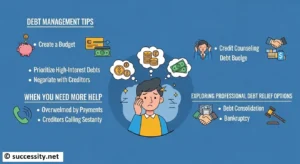
Sometimes, DIY methods aren’t enough, especially if you have high-interest debt or feel completely overwhelmed. These professional debt relief options can provide structure and significant savings.
Exploring Professional Debt Relief Options
Tip 9 – Consider Debt Consolidation
Debt consolidation is the process of taking out a new, single loan to pay off multiple other debts. The goal is to get a lower interest rate and simplify your life with a single monthly payment. Common options include personal loans and 0% APR balance transfer credit cards.
| Pros of Debt Consolidation | Cons of Debt Consolidation |
|---|---|
| Single, simpler monthly payment | Doesn’t solve underlying spending habits |
| Can significantly lower your interest rate | May have origination fees or transfer fees |
| Provides a fixed repayment timeline | Requires a good credit score for the best rates |
Tip 10 – Work with a Non-Profit Credit Counselor
If your situation is more complex, a reputable non-profit credit counseling agency can be a lifesaver. A certified counselor can review your entire financial picture and help you create a debt repayment plan tailored to you.
One of their primary tools is a Debt Management Plan (DMP). With a DMP, you make one monthly payment to the agency, and they distribute it to your creditors, often at a lower negotiated interest rate. This is a structured, supportive way to pay off your debt in 3-5 years. For a trusted source, start with the National Foundation for Credit Counseling (NFCC).
The Finish Line – How to Stay Debt-Free for Good
Paying off your last debt is an incredible achievement. But the journey doesn’t end there. The goal is to build habits that ensure you stay debt-free for life.
Maintaining Your Financial Health for the Future
- Automate Your Finances: Set up automatic transfers to your savings and investment accounts on payday.
- Build a Full Emergency Fund: Grow your starter fund to cover 3-6 months of essential living expenses.
- Set New Financial Goals: Shift your focus from paying off the past to building your future. Start planning to set new financial goals like saving for retirement, a down payment, or other big life dreams.
- Regularly Review Your Budget: Your life and income will change. Check in with your budget every month to make sure it still reflects your goals.
Final Thoughts – Your Journey to Financial Freedom Starts Now
Getting out of debt is a marathon, not a sprint. It requires commitment, discipline, and a solid plan. By understanding your finances, choosing the right strategy, and taking consistent action, you can move from feeling overwhelmed to feeling empowered.
Remember the key steps: Understand -> Plan -> Act -> Maintain. You have the tools. Your journey to financial freedom starts with the very next dollar you earn.
Frequently Asked Questions About Debt Management
What is the fastest way to get out of debt?
The fastest way combines the Debt Avalanche method (paying off high-interest debt first) with aggressively increasing your income and cutting expenses. The more money you can put toward your debt each month, the faster you’ll be free.
Is debt consolidation a good idea?
It can be, but only if it lowers your overall interest rate and you’ve committed to changing the spending habits that led to debt. It’s a tool, not a cure. If you consolidate and then run up your credit cards again, you’ll be in a much worse position.
How does a debt management plan (DMP) affect your credit score?
A DMP itself doesn’t directly hurt your score. In fact, making consistent, on-time payments through the plan will help improve your payment history, which is the biggest factor in your score. However, you will typically be required to close the credit accounts included in the plan, which can temporarily lower your score due to a change in your credit utilization ratio.
Should I use my savings to pay off debt?
You should never deplete your emergency fund to pay off debt. It’s wise to keep at least a $1,000 starter emergency fund on hand. For other savings (like retirement accounts), it’s generally not recommended to withdraw funds, as you can face steep taxes and penalties, and you’ll sacrifice future growth.
About the Author