Sophia
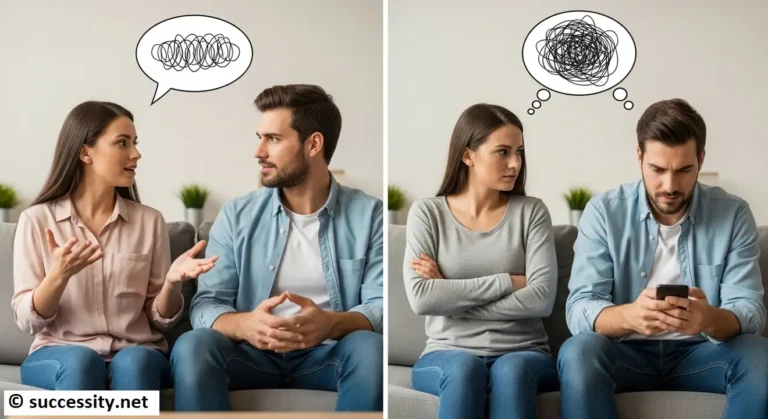
Imagine this: You’re trying to explain a stressful day at work to your partner. You detail the frustrating meeting, the impossible deadlines, and the feeling of being completely overwhelmed. Your partner listens, nods once, and then immediately says, “Well, you should just talk to your boss. You’re making a mountain out of a molehill.”
In that instant, the connection snaps. You didn’t feel seen. You felt judged, minimized, and deeply alone.
This is the moment where relationships flounder. It’s not a lack of love that causes distance; it’s a failure of connection. The bridge that closes this gap—the single most powerful tool for improving emotional connection—is empathy in relationships.
Empathy is often misunderstood as a soft skill, but it is, in reality, the core engineering that holds a partnership together. It’s the ability to step completely outside your own experience and into the inner world of the person you love.
In this comprehensive guide, we will break down what empathy truly is, explore its immense benefits of empathy in daily life, and provide actionable techniques on how to be more empathetic starting today.
Defining the Engine of Connection
Empathy is more than just being nice; it is an active state of understanding. When we are empathetic, we aren’t just passively receiving information; we are mentally and emotionally processing how that information feels to our partner.
Research consistently shows that partners who feel truly understood are significantly more satisfied and resilient, even during periods of high stress or conflict.
The Crucial Distinction – Empathy vs. Sympathy vs. Compassion
We often use these words interchangeably, but they engage our brains and hearts in very different ways:
- Sympathy: Feeling pity or sorrow for someone else’s misfortune. (Example: “I feel bad for you.”) Sympathy creates distance; it keeps you on the outside looking in.
- Empathy: Feeling with someone. It’s the ability to share or understand the feelings of another person as if those feelings were your own. (Example: “I can sense how frustrated you must be feeling.”)
- Compassion: Empathy paired with action. Understanding their suffering and being moved to alleviate it. (Example: “I understand how frustrated you are; how can I help lighten your load?”)
For a relationship to thrive, we need to move beyond simple sympathy and engage in genuine empathy, which often leads naturally to compassionate action.
The Foundational Types of Empathy
Understanding empathy is easier when you realize it operates on three different levels. Mastering types of empathy allows you to respond to your partner in the most appropriate way for the situation.
Cognitive Empathy (The Head)
This is the ability to intellectually understand another person’s perspective and emotional state. It’s “knowing” how someone feels.
- Role in Relationships: Cognitive empathy is essential for navigating logistics and decision-making. It helps you anticipate their needs and reactions. For instance, if you know your partner dreads confrontation, cognitive empathy helps you understand why they might avoid a difficult conversation.
Emotional/Affective Empathy (The Heart)
This is the visceral experience of feeling what another person feels. When they are sad, you feel a tinge of sadness. When they are joyful, you feel happiness for them.
- Role in Relationships: This type of empathy is the core of emotional intimacy. It creates a deep, non-verbal bond. It’s the feeling that says, “We are connected on the deepest level.” However, emotional empathy requires strong boundaries so you don’t become overwhelmed by your partner’s distress.
Compassionate Empathy (The Hand)
Compassionate empathy integrates both the intellectual understanding (Cognitive) and the shared feeling (Emotional) and compels you toward meaningful support. This often aligns with understanding your partner’s love languages, ensuring your support is received in the way they need it most.
- Role in Relationships: This is empathy in action. It’s the partner who brings you soup when you’re sick or takes over a stressful chore without being asked. It solidifies trust because the partner knows their feelings matter and will translate into concrete support.
Why Empathy is the Cornerstone of Connection

Empathy is the highest form of relational intelligence. When practiced consistently, the benefits of empathy transform the relational landscape.
Enhanced Trust and Security
Trust is built not just on shared history, but on shared understanding. When a partner knows you are willing to temporarily put aside your own agenda to witness their experience, building trust becomes automatic. Feeling seen is the ultimate form of security. If I know you won’t judge my vulnerability, I will feel safe sharing it.
Conflict Resolution and De-escalation
Arguments rarely begin because of facts; they start because of hurt feelings. Empathy is the essential tool required to resolve conflicts in relationships effectively.
When you lead with empathy, the focus shifts:
- From: “Why did you do that?” (Accusation)
- To: “I can see you were under a lot of pressure, and I understand why you reacted that way, even though it hurt my feelings.” (Understanding and Validation)
This shift immediately lowers defensive barriers, making it far easier to find a solution rather than focusing on who is “right.”
Emotional Regulation and Validation
Validation is the language of empathy. It means acknowledging the reality of your partner’s emotional experience, even if you don’t agree with their interpretation of the facts.
When someone says, “I am stressed,” the empathetic response is validation: “It makes complete sense that you feel stressed right now.”
The non-empathetic (and unhelpful) response is fixing: “You just need to breathe and manage your time better.”
Validation gives your partner the permission to feel what they feel, calming their nervous system and making them feel less frantic.
Actionable Steps – How to Cultivate Empathy
Empathy isn’t magic; it’s a skill set, and like any skill, it improves with deliberate practice. If you want to know how to be more empathetic, start with these three core practices.
Master the Art of Empathetic Listening
True listening is not waiting for your turn to talk; it is dedicating your full attention to understanding the other person’s perspective. This is one of the most powerful empathetic listening skills you can develop.
1. Silence the Inner Narrator
When your partner is speaking, your brain is often frantically writing your response. Stop. Consciously tell yourself: My only job right now is to understand. Delay your rebuttal until they have fully finished expressing their thoughts and feelings.
2. Focus on Non-Verbal Cues
Your body language often speaks louder than your words. When listening:
- Put down the phone or book.
- Turn your body toward them completely (square your shoulders).
- Maintain soft eye contact.
- Nod occasionally to show engagement, not necessarily agreement.
3. Active Confirmation and Mirroring
After they speak, use clarifying and summarizing statements. This proves you were listening and gives them a chance to correct any misunderstandings.
- Use Phrases Like: “So, if I’m hearing you correctly, the biggest frustration here is feeling unsupported, is that right?” or “Help me understand why you reacted this way; what were you feeling in that moment?”
The Practice of Validation, Not Fixing
The single biggest mistake empathetic people make is jumping too quickly into solution mode. When someone is hurting, they usually need to be heard before they need to be fixed.
Avoid Minimizing Phrases:
Never use language that diminishes their experience, such as:
- “It’s not that big of a deal.”
- “You shouldn’t feel that way.”
- “At least it’s not as bad as…”
Instead, lead with phrases that validate the emotional reality:
- “That sounds incredibly painful.”
- “I can totally see why you’re feeling overwhelmed right now.”
- “I know that must be really frustrating.”
Utilize the “I Imagine…” Framework
This technique forces you into perspective-taking (Cognitive Empathy). It requires you to articulate what you believe your partner is experiencing, giving them a chance to confirm or correct your read.
How to Use It:
Instead of saying, “You’re acting stressed,” say, “I imagine dealing with that much responsibility must make you feel totally drained, even before you walk in the door.”
This shows you haven’t just noticed the behavior (stress); you’ve acknowledged the internal source (being drained).
The Essential Prerequisite—Self-Empathy
You cannot sustain genuine empathy for others if you are depleted or overwhelmed. Improving emotional connection starts internally. Just as a plane passenger must put on their own oxygen mask first, a partner must attend to their own emotional health to be present for someone else. This is the practice of self-compassion.
Understanding Emotional Contagion
Emotional empathy means you feel what your partner feels. If they are stressed, you may start to feel stressed. If you haven’t mastered emotional regulation, you risk becoming overwhelmed by their feelings, leading to two undesirable outcomes:
- Absorption: You internalize their stress, making you incapable of helping.
- Withdrawal: You shut down their distress because you can’t handle the feeling it generates in you.
Giving Yourself Grace
Self-empathy involves treating yourself with the same kindness and non-judgment you offer a loved one. When you make a mistake in the relationship (like snapping at your partner or forgetting an important date), self-empathy allows you to acknowledge your failure without descending into shame.
- The Difference:
- Self-Criticism: “I am a terrible partner. I ruined everything.”
- Self-Empathy: “I made a mistake, but I was also incredibly stressed today. I am human, and I can apologize and try better next time.”
When you practice self-empathy, you enter relational conversations from a place of stability, making it easier to be generous with your partner.
Identifying and Meeting Your Own Needs
Before engaging in heavy emotional labor, take inventory: Am I hungry? Am I tired? Am I anxious about something unrelated? These biological and emotional needs directly impact your capacity for outward empathy. Meeting these needs is not selfish; it is required for sustainable compassion.
Applying Empathy During High-Stakes Conflict

The real test of empathy doesn’t happen when things are easy; it happens during an argument. This is when the stress hormones are flying, and the instinct to protect yourself is strongest. Using empathy during arguments is the most powerful de-escalation technique available.
Find the Underlying Emotion, Not the Content
Most arguments are rooted in a primary emotion (fear, loneliness, shame) disguised by a secondary, louder emotion (anger, frustration). An empathetic partner listens past the angry words to find the deeper need.
- Example Scenario: Your partner is furious because you forgot to take out the trash (the content).
- Empathetic Response: “I know you are angry about the trash, but I hear how stressed you are about feeling like you’re carrying the whole household burden. Is that what this is really about?” (Focusing on the underlying need for partnership and relief).
Practice the “What-If” Perspective Shift
Before responding, ask yourself: If my partner’s perspective were 100% true, how would I feel?
This cognitive exercise forces you to see the reality through their lens. Even if you disagree fundamentally with their interpretation, this shift allows you to validate their feeling: “If I genuinely believed I was being ignored, I would feel angry too.” This validation does not equal agreement; it simply acknowledges their emotional truth.
Taking a “Time Out” for Empathetic Reflection
If an argument becomes too heated, don’t be afraid to utilize a pre-agreed-upon time-out phrase (e.g., “Pause” or “I need a break”). Use this break not to rehearse your next defense, but to engage in empathetic reflection:
- What was my partner feeling when they said that?
- What is the pain point they are trying to communicate?
- How can I re-enter the conversation with validation first?
This structured pause ensures that when you return, you are leading with connection, not attack. This is key to fighting fair.
The Vulnerability-Empathy Loop
Empathy and vulnerability are intrinsically linked. Empathy drives vulnerability, and vulnerability reinforces empathy. This continuous cycle, the vulnerability-empathy loop, is what sustains deep emotional intimacy over decades.
The Cycle Explained
- Vulnerability: A partner takes a risk and shares a sensitive feeling, thought, or need.
- Empathy: The receiving partner meets that vulnerability with validation, understanding, and kindness (without judgment).
- Trust/Intimacy: The vulnerable partner feels safe and seen. Trust is solidified.
- Increased Vulnerability: The security gained encourages the partner to be even more open next time.
When empathy fails, the cycle breaks. If a partner shares a vulnerability and is met with judgment or indifference (a lack of empathy), they will retreat and share less next time, causing distance.
Creating the Space for Sharing
To encourage vulnerability, you must actively signal that it is safe to share. Use open-ended, gentle questions that invite depth:
- “What worries you the most right now?”
- “How is this feeling settling in your body?”
- “What kind of support would actually help you right now?”
Avoid rapid-fire questions or interrogating them; simply create a warm, receptive space where they can explore their own feelings aloud.
Empathy as Mutual Investment
Ultimately, this loop requires both partners to be willing to be vulnerable and willing to be empathetic recipients. It is a shared investment. When both partners commit to this practice, the relationship becomes self-sustaining—constantly generating emotional intimacy and resilience by prioritizing the internal experience of the other.
Roadblocks to Empathy and Solutions
Even when we genuinely want to connect, certain mental and emotional barriers can sabotage our efforts to sustain empathy in relationships.
Defensiveness and Self-Focus
The most common barrier is defensiveness. When a partner shares a criticism or a complaint, our instinctual reaction is often to protect our ego by arguing or explaining our good intentions. This kills empathy instantly because the focus shifts back to you.
The Barrier: “Wait, I didn’t mean to hurt you! Let me explain why I did X, Y, Z.”
The Solution: The 60-Second Pause.
When you feel triggered, ask your partner for a brief pause. “Thank you for sharing that. I need 60 seconds to process what you just said before I can respond thoughtfully.” Use that minute to breathe and remind yourself: Understanding comes before defense.
Emotional Fatigue and Burnout
Empathy is emotionally taxing. If you are highly stressed, sleep-deprived, or dealing with your own personal crisis, your capacity to offer genuine emotional support shrinks dramatically. You cannot pour from an empty cup.
The Barrier: Chronic exhaustion leading to emotional unavailability.
The Solution: Establishing Healthy Boundaries.
It is perfectly empathetic to communicate your own limitation. If your partner needs a heavy conversation but you are completely drained, practice compassionate boundary-setting: “I really want to be present for this, but I am too exhausted right now. Can we dedicate time to this tomorrow morning when I can give you my full attention?”
The Toxic Impact of a Lack of Empathy
When partners consistently fail to practice empathy, the relationship slowly erodes. A sustained lack of empathy in marriage or partnership leads to devastating outcomes:
- Stonewalling: The emotional withdrawal where one partner refuses to engage, shutting down completely.
- Resentment: The feeling of constantly having to justify your emotions or fight for validation.
- Emotional Distance: Partners become co-existing roommates rather than connected lovers, leading to emotional or physical affairs as they seek validation elsewhere.
If you recognize these patterns, it is a clear sign that you and your partner need to actively work on your empathetic listening skills and communication patterns.
Final Thoughts
Empathy is often seen as an intangible quality, but it is the most tangible, practical, and effective tool for sustained relationship success. It is the practice of vulnerability, patience, and deliberate focus.
It will take effort. There will be times when you fail to be empathetic, when your ego takes over, or when you are simply too tired. That is okay. True connection comes not from being perfect, but from the willingness to try again, to apologize for the lapse, and to continue the lifelong work of truly seeing the person you love.
By prioritizing empathy in relationships, you move beyond merely loving your partner to truly knowing them, which is the foundation for lasting intimacy and trust.
Frequently Asked Questions (FAQ)
Is it possible to have too much empathy in a relationship?
Yes, if empathy is practiced without boundaries, it can lead to emotional exhaustion and burnout. This is called empathic distress. Healthy empathy means understanding your partner’s feelings without absorbing them and still prioritizing your own needs and emotional regulation.
What does a lack of empathy look like in marriage?
A lack of empathy is characterized by constant invalidation, dismissal of feelings (“You’re overreacting”), chronic defensiveness, difficulty apologizing, and an inability to understand why a partner might be hurt by an action. This often results in communication failures and emotional withdrawal.
How quickly can I learn empathetic listening skills?
You can start practicing key skills like active confirmation and non-verbal cueing immediately. The improvement in your relationship will likely be noticeable quickly, as feeling heard provides immediate relief. However, mastering the ability to silence your inner narrator and genuinely embrace perspective-taking is a lifelong practice.
What is the difference between empathy and projection?
Empathy is the effort to understand their internal world. Projection is attributing your internal feelings or thoughts onto them. For example, if your partner is sad, empathy is asking, “What are you feeling?” Projection is saying, “You must be sad because of X, which is what I would feel.”
About the Author