Sophia
Let’s be honest: the sound of your morning alarm probably isn’t your favorite. If you find yourself locked in a daily battle with the snooze button, feeling like you’re wading through mental molasses until your second cup of coffee kicks in, you’re not alone. But what if the problem isn’t that you need more sleep, but that you need smarter sleep?
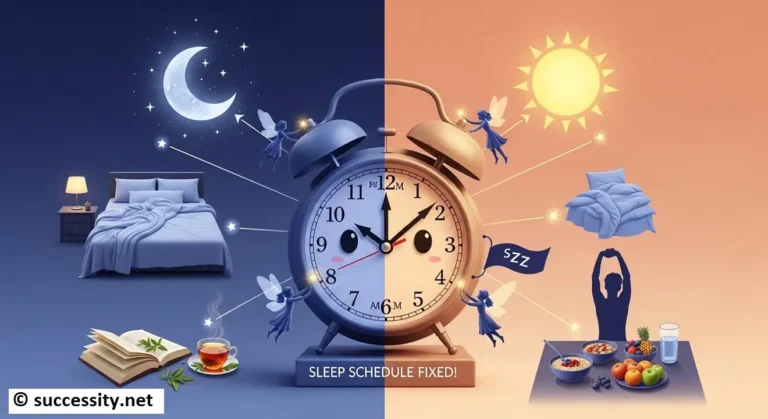
The secret to waking up energized and conquering your day lies in learning how to manage your sleep cycle.
In our hyper-connected, always-on world, it’s easier than ever to fall out of sync. Late-night screen time, irregular work hours, and daily stress are constantly at war with our biology, disrupting our natural body clock. This leaves us feeling groggy, unfocused, and perpetually tired.
But it doesn’t have to be this way. Reclaiming your energy is possible, and it starts with understanding and respecting your body’s internal rhythms. This guide is your complete blueprint. We’re not just going to give you a list of generic tips; we’re going to walk you through the science, the strategies, and the step-by-step actions you can take to fix your sleep schedule, reset your internal clock, and finally wake up feeling refreshed and ready for anything.
First, What Exactly IS a Sleep Cycle? (And Why It Matters)
Before we can fix something, we need to understand how it works. The term “sleep cycle” gets thrown around a lot, but it’s more than just when you feel tired. It’s a complex, predictable pattern that your brain and body move through every single night. Getting this pattern right is the key to high-quality, restorative rest.
The 4 Stages of Sleep – Your Body’s Nightly Repair Program
Think of a full night’s sleep not as one long event, but as a series of 90- to 110-minute cycles. Within each cycle, your brain progresses through four distinct stages.
- NREM Stage 1 (Light Sleep): This is the very beginning, the first 5-10 minutes where you’re drifting off. Your breathing and heart rate begin to slow, and your muscles relax. It’s easy to be woken up during this stage.
- NREM Stage 2 (Deeper Light Sleep): You spend about half your night in this stage. Your body temperature drops, and your brain waves slow down. This is where your brain begins to process memories and tidy up the day’s information.
- NREM Stage 3 (Deep Sleep): This is the holy grail of physical restoration. During this critical stage, your body releases growth hormone to repair tissues, build bone and muscle, and strengthen your immune system. Waking up from deep sleep is difficult and is what causes that intense grogginess and disorientation.
- REM (Rapid Eye Movement) Sleep: This stage usually begins about 90 minutes after you fall asleep. Your brain activity skyrockets to levels similar to when you’re awake. This is where most vivid dreaming occurs. REM sleep is essential for emotional regulation, memory consolidation, and learning.
A healthy night involves cycling through these stages 4-6 times. Disruptions—like a noisy room or getting up to use the bathroom—can force you back to a lighter stage, robbing you of the critical deep and REM sleep you need to improve sleep quality.
Circadian Rhythm vs. Sleep Cycle – Understanding Your Internal Clock
Here’s where people often get confused. If the sleep cycle is the performance, the circadian rhythm is the conductor of the orchestra.
Your circadian rhythm is your body’s 24-hour internal clock, located in a part of your brain called the hypothalamus. It regulates countless processes, including your sleep-wake cycle, hormone release, and body temperature. It’s programmed to respond to environmental cues, with the most powerful one being light. When your eyes detect sunlight in the morning, your clock starts its “daytime” program. When darkness falls, it signals the production of melatonin, the hormone that makes you feel sleepy.
When your lifestyle (e.g., staying up late on your phone) clashes with your circadian rhythm, your body gets confused. This is why a well-managed sleep cycle is less about a specific bedtime and more about maintaining a consistent rhythm that works with your biology, not against it.
The Telltale Signs of a Disrupted Sleep Cycle
How do you know if your internal clock is off? Your body will send you clear signals.
- Difficulty Falling Asleep: You lie in bed for more than 30 minutes with a racing mind, even when you feel physically tired.
- Frequent Nighttime Awakenings: You wake up multiple times a night, especially around 2-4 AM, and struggle to fall back asleep.
- Persistent Daytime Fatigue: You feel a constant sense of exhaustion or “brain fog” that caffeine can’t seem to fix.
- Mood Swings and Irritability: You feel emotionally fragile, easily annoyed, or have a short fuse.
- Reliance on “Crutches”: You can’t function without multiple cups of coffee, energy drinks, or a mid-afternoon nap just to get through the day.
- Feeling “Jet-Lagged” at Home: You experience that disoriented, out-of-sync feeling without ever leaving your time zone.
If any of these sound familiar, it’s a clear sign that it’s time to take action and learn how to reset your sleep cycle.
Unlocking Your Potential – The Surprising Benefits of a Consistent Sleep Cycle

Making the effort to manage your sleep cycle isn’t just about feeling less tired. It’s one of the single most powerful investments you can make in your overall health, happiness, and performance. When your sleep is dialed in, the benefits ripple through every aspect of your life.
Peak Mental Performance – Improved Focus, Memory, and Creativity
Think of your brain like a bustling office. During the day, it’s a chaotic mess of emails, meetings, and projects. Deep sleep is the night-cleaning crew. It’s when your brain activates its glymphatic system to literally wash away metabolic waste products that build up during waking hours, including those linked to neurodegenerative diseases.
A consistent sleep cycle ensures this cleaning happens efficiently, leading to:
- Sharper Focus: You can concentrate on tasks for longer without getting distracted.
- Enhanced Memory: During REM sleep, your brain consolidates the day’s learning, transferring important information from short-term to long-term memory.
- Better Problem-Solving: A well-rested mind is more flexible and creative, allowing you to see connections and solutions you’d miss when fatigued.
A Stronger Body – Boosted Immunity, Metabolism, and Physical Recovery
Your body does its most important repair work while you sleep. When you prioritize a healthy sleep schedule, you’re giving your body the tools it needs to thrive.
- A Robust Immune System: During deep sleep, your body produces cytokines, proteins that target infection and inflammation. Chronic sleep loss can suppress your immune system, making you more susceptible to colds and other illnesses.
- A Balanced Metabolism: Poor sleep disrupts the hormones that regulate appetite—ghrelin (the “go” or hunger hormone) and leptin (the “stop” or fullness hormone). This imbalance can lead to cravings for high-calorie foods and contribute to weight gain.
- Faster Physical Recovery: Whether you’re an athlete or just active, deep sleep is when your body releases growth hormone to repair muscles, heal tissues, and reduce inflammation.
Emotional Stability – Better Mood Regulation and Reduced Stress
Ever notice how a bad night’s sleep can leave you feeling irritable and anxious? There’s a scientific reason for that. Sleep is crucial for processing emotions. The amygdala, your brain’s emotional rapid-response center, becomes hyperactive when you’re sleep-deprived. Meanwhile, its connection to the prefrontal cortex—the logical, rational part of your brain—weakens.
The result? You react more strongly to negative events and have less control over your emotional responses. Improving your sleep quality helps restore this balance, giving you:
- Greater Emotional Resilience: You’re better equipped to handle daily stressors without feeling overwhelmed.
- A More Positive Outlook: Well-rested individuals consistently report better moods and higher life satisfaction.
- Reduced Anxiety: A stable sleep cycle helps regulate cortisol (the stress hormone) and promotes a feeling of calm.
5 Actionable Steps to Manage and Reset Your Sleep Cycle
Understanding the “why” is great, but now it’s time for the “how.” The following are practical, science-backed steps you can start implementing today to take back control of your sleep. Think of these not as strict rules, but as powerful tools to add to your wellness toolkit. The key to success is consistency.
1. Master Your Light Exposure (The #1 Rule)
If there’s one takeaway from this entire guide, it’s this: light is the most powerful signal you can send to your circadian rhythm. Managing it correctly is the foundation for a healthy sleep-wake cycle.
In the Morning: Within 30 minutes of waking up, expose yourself to 10-15 minutes of direct, natural sunlight. Don’t look directly at the sun, but face its direction without sunglasses. This potent signal hits your brain’s master clock and screams, “It’s daytime! Shut down melatonin production and start the clock!” This simple act makes it significantly easier to feel sleepy at the right time that night. If it’s dark or cloudy, turn on all the bright indoor lights.
In the Evening: The opposite is true at night. An hour or two before bed, start dimming the lights in your home. Avoid bright overhead lights and opt for warm, low-wattage lamps. This mimics a natural sunset and signals to your brain that it’s time to start producing melatonin, the hormone that makes you feel sleepy.
2. Set a Consistent Wake-Up Time (Your Non-Negotiable Anchor)
This might sound counterintuitive, but the most important anchor for your sleep schedule isn’t your bedtime—it’s your wake-up time. Your body craves predictability. Waking up at the same time every single day, yes, even on weekends, stabilizes your circadian rhythm like nothing else.
If you slept poorly, fight the urge to sleep in. Get up at your set time. You might feel more tired that day, but you’ll be setting yourself up for a much better night’s sleep, making it easier to fall asleep at your desired bedtime.
3. Optimize Your Daytime Habits for Nighttime Success
Your choices during the day have a massive impact on your sleep quality at night.
- Strategic Exercise: Regular physical activity is fantastic for sleep. Aim for at least 30 minutes of moderate exercise most days. The timing matters, though. A morning or afternoon workout can help regulate your body clock and deepen your sleep. Try to avoid intense, high-energy workouts within 2-3 hours of bedtime, as this can raise your core body temperature and cortisol, making it harder to wind down.
- Caffeine Curfew: We all love our coffee, but caffeine has a half-life of about 5-6 hours. This means if you have a cup at 3 PM, half of that caffeine could still be circulating in your system at 9 PM. Implement a strict “caffeine curfew.” For most people, this means no coffee, black tea, or energy drinks after 2 PM.
4. Create a Powerful “Wind-Down” Routine
You can’t expect to go from 100 mph to a dead stop. You need a buffer between your busy day and bedtime. A wind-down routine is a sequence of calming activities you do every night for 30-60 minutes before bed. This trains your brain to associate these activities with sleep.
Your routine could include:
- Reading a physical book (not on a bright screen)
- Gentle stretching or yoga
- Listening to calming music or a podcast
- Taking a warm bath or shower (the subsequent drop in body temperature promotes sleep)
- Journaling to get thoughts and worries out of your head
5. Engineer the Perfect Sleep Environment
Your bedroom should be a sanctuary for sleep, and nothing else. Optimize it to be a cool, dark, and quiet cave.
Keep it Dark: Use blackout curtains or a high-quality sleep mask to block out all light. Even a small amount of light from a streetlamp or an electronic device can disrupt melatonin production.
Keep it Cool: The ideal temperature for sleep is surprisingly cool, between 60-67°F (15-19°C). Your body temperature naturally dips as you fall asleep, and a cool room facilitates this process.
Keep it Quiet: If you live in a noisy area, earplugs or a white noise machine can be a game-changer. The consistent, boring sound of a fan or a white noise app can mask sudden noises that would otherwise wake you up.
Eating for Better Sleep – Foods That Help (and Hurt) Your Sleep Cycle

What you put on your plate can either set you up for a night of restorative rest or a night of tossing and turning. Your sleep and nutrition are deeply connected.
The Sleep-Promoting Pantry – What to Eat for Dinner
Aim to eat your last large meal 2-3 hours before bed to give your body time to digest. Focus on a balanced meal that includes:
- Tryptophan-Rich Foods: Tryptophan is an amino acid that your body uses to produce serotonin and melatonin. Find it in turkey, chicken, nuts, seeds, and bananas.
- Magnesium Sources: Magnesium is a mineral that plays a huge role in calming the nervous system. Excellent sources include leafy greens (spinach, kale), almonds, avocados, and dark chocolate (in moderation!).
- Complex Carbohydrates: A small portion of complex carbs like sweet potatoes, brown rice, or oatmeal can help tryptophan reach the brain more easily.
The Sleep-Stealing Snacks – What to Avoid Before Bed
- Spicy or Fatty Foods: These can cause heartburn and indigestion, making it very uncomfortable to lie down and fall asleep.
- Sugary Treats: A dessert high in sugar can cause your blood sugar to spike and then crash, which can wake you up in the middle of the night.
- Hidden Caffeine: Be mindful of caffeine in dark chocolate, some sodas, and even decaffeinated coffee (which still contains small amounts).
The Truth About a “Nightcap” and Alcohol’s Impact on Sleep
It’s a common myth that alcohol helps you sleep. While a glass of wine might make you feel drowsy and help you fall asleep faster, it wreaks havoc on your sleep architecture. Alcohol suppresses REM sleep, the critical stage for mental and emotional restoration.
It also often causes you to wake up in the second half of the night as your body metabolizes it, leaving you feeling unrested and dehydrated. For better sleep, it’s best to limit alcohol, especially in the hours before bed.
Common Sleep Cycle Wreckers (and How to Fight Back)
Sometimes, despite our best efforts, life gets in the way. Here’s how to handle a few common sleep saboteurs.
The Shift Worker’s Dilemma – Managing a Rotating Schedule
Working nights or rotating shifts puts you in direct opposition to your natural circadian rhythm. To cope:
- Be a Vampire: On your workdays, commit fully to the night schedule. Use heavy blackout curtains and a sleep mask to make your bedroom as dark as possible during the day.
- Control Light: Wear sunglasses on your drive home in the morning to prevent sunlight from signaling “wake up” to your brain.
- Keep it Consistent: As much as possible, try to stick to your sleep/wake schedule even on your days off to avoid a constant state of social jet lag.
The Traveler’s Curse – Conquering Jet Lag
Jet lag is the ultimate proof of your circadian rhythm’s power. To fix jet lag faster:
- Adjust Before You Go: A few days before your trip, start shifting your bedtime and wake-up time an hour closer to your destination’s time zone.
- Hydrate: Dehydration makes jet lag symptoms worse. Drink plenty of water before, during, and after your flight.
- Get on Local Time Immediately: When you arrive, get outside in the sunlight. Eat your meals and go to bed according to the local time, not what time it is back home.
The Silent Saboteur – How Stress and Anxiety Derail Your Sleep
Is anxiety keeping you awake? A racing mind is one of the biggest enemies of sleep. When you’re stressed, your body produces excess cortisol, which is an alertness hormone.
- Perform a “Brain Dump”: About an hour before bed, take a notepad and write down everything that’s on your mind—your to-do list, your worries, your random thoughts. Getting them out of your head and onto paper can provide immense relief.
- Practice Mindfulness: Use your wind-down routine to practice deep breathing exercises or guided meditation. This activates your body’s relaxation response and lowers cortisol levels.
Technology and Your Sleep – A Modern Double-Edged Sword
Our devices are both a blessing and a curse when it comes to sleep. The key is to use them wisely.
The Dark Side – How Your Devices Sabotage Your Circadian Rhythm
- Blue Light Exposure: The bright, blue-wavelength light emitted from smartphones, tablets, and laptops is particularly disruptive. It directly suppresses the production of melatonin, tricking your brain into thinking it’s still daytime.
- Cognitive Stimulation: Scrolling through social media, answering emails, or watching an action-packed show keeps your brain engaged and alert. This is the opposite of the calm, passive state needed to drift off to sleep.
Using Tech for Good – Apps and Gadgets to Improve Your Sleep
Technology isn’t all bad. When used correctly, it can be a powerful ally.
- Use Blue Light Filters: Activate the built-in “Night Shift” (Apple) or “Night Light” (Android) feature on your devices. This shifts the screen color to a warmer, less-disruptive tone in the evening.
- Meditation & White Noise Apps: Apps like Calm, Headspace, or BetterSleep offer guided meditations, sleep stories, and soundscapes that can help you relax and drown out distractions.
- Sleep Trackers: Wearables like the Oura Ring, Whoop, or Fitbit can provide valuable data on your sleep stages and quality. Use this information to see how your habits (like a late-night meal or an evening workout) affect your rest, but avoid becoming obsessed with achieving a “perfect” score.
Your Journey to Better Sleep Starts Tonight
We’ve covered a lot of ground, but the path to a better-managed sleep cycle doesn’t have to be complicated. It all boils down to consistency and respecting your body’s natural rhythms. If you remember nothing else, focus on these three pillars:
- A Consistent Wake-Up Time: This is the anchor for your entire day.
- Managed Light Exposure: Get sun in the morning and embrace darkness at night.
- A Relaxing Evening Routine: Create a buffer to de-stress and prepare for rest.
Taking control of your sleep is one of the most profound acts of self-care you can perform. It’s not a luxury; it’s the foundation upon which your physical health, mental clarity, and emotional well-being are built. You don’t need to be perfect overnight. Just choose one or two strategies from this guide and start tonight. Small, consistent changes will lead to massive improvements in how you feel every single day.
What is the #1 sleep tip from this guide you will implement tonight? Share your commitment in the comments below!
Frequently Asked Questions (FAQ)
How long does it take to fix your sleep cycle?
While you can feel significant improvements in just a few days, it typically takes 1-2 weeks of consistent effort to fully reset your circadian rhythm. The most important factor is sticking to your new routine, especially your wake-up time.
What is the fastest way to reset your sleep schedule?
The fastest method involves a “hard reset.” Pick your ideal wake-up time and get up then, no matter how little you slept. Get immediate, bright sunlight and avoid long naps (a 20-minute power nap before 2 PM is okay if you must). It might be tough for a day or two, but this forces your body clock to adjust quickly.
Why do I wake up at 3 AM every night?
Waking around 3 AM is incredibly common. It can be linked to a natural dip between sleep cycles, but it’s often exacerbated by a spike in the stress hormone cortisol. It can also be related to blood sugar fluctuations from a late or sugary meal. Improving your sleep hygiene and stress management routines can often resolve this.
Can you really catch up on sleep on the weekends?
You can pay back some of your “sleep debt” by sleeping in a little, but you can’t completely erase the negative impact of a week of poor sleep. Your cognitive performance and mood won’t fully recover. Aiming for consistency throughout the week is a far more effective strategy.
Is it better to go to bed earlier or wake up at the same time?
Waking up at the same time is the more powerful lever for anchoring your sleep cycle. If you are consistent with your wake-up time, your body will naturally start to build “sleep pressure” and make you feel tired at an appropriate time in the evening, guiding you to an earlier bedtime.
About the Author