Sophia
Does your mind ever feel like a web browser with too many tabs open? The constant ping of notifications, the mental to-do list that never ends, the quiet hum of anxiety in the background—it’s the soundtrack of modern life for many of us. We’re told to hustle, to stay connected, to do more. But what if the most productive thing you could do is nothing at all?
Welcome to the practice of meditation.
Forget the intimidating images of monks on mountaintops. Meditation isn’t about emptying your mind or achieving some mystical state. It’s a practical, science-backed exercise for your brain. It’s a tool that can help you navigate the chaos, turn down the volume on your inner critic, and build a stronger, more resilient mind.
This guide will explore the powerful connection between meditation and mental health. We’ll look at the science, break down the different techniques, and give you a simple, step-by-step plan to start finding your own calm and clarity today.
The Science-Backed Connection – How Meditation Improves Mental Health
For centuries, people have turned to meditation for peace. Today, science is finally catching up and proving what practitioners have known all along: this practice has a profound and measurable impact on our well-being. Here’s how it works.
Reducing Anxiety and Calming the Nervous System
When you feel stressed or anxious, your body enters “fight-or-flight” mode, flooding your system with the stress hormone cortisol. Meditation acts as a powerful antidote. By focusing on your breath, you activate the parasympathetic nervous system—your body’s “rest-and-digest” state. This lowers your heart rate, slows your breathing, and reduces cortisol levels. Consistent practice of this kind of stress relief meditation can train your brain to be less reactive to stressors in the first place.
Alleviating Symptoms of Depression
Depression often traps us in a cycle of rumination—repeatedly dwelling on negative thoughts and feelings. Meditation for depression, particularly mindfulness meditation, helps you break this cycle. It teaches you to observe your thoughts from a distance without getting entangled in them. You learn to recognize a negative thought for what it is—just a thought, not an absolute truth. This creates mental space and allows for a more balanced and positive perspective to emerge.
Enhancing Focus and Cognitive Function
In a world of constant distraction, the ability to focus is a superpower. Meditation is like a workout for your prefrontal cortex, the part of your brain responsible for attention and concentration. Studies show that regular meditators have an increased ability to sustain focus and ignore distractions, leading to greater clarity and efficiency in their daily tasks.
Boosting Emotional Regulation and Self-Awareness
Have you ever snapped at someone and immediately regretted it? Meditation helps you create a crucial “pause” between a trigger and your reaction. By becoming more aware of your internal state, you can notice feelings of anger or frustration as they arise. This awareness gives you the choice to respond thoughtfully rather than react impulsively. This improved emotional regulation is a cornerstone of mental wellness.
Promoting Better Sleep and Combating Insomnia
A racing mind is the enemy of good sleep. Meditation helps quiet the mental chatter that so often keeps us awake. Practices like a body scan can release physical tension, while mindfulness techniques can help you let go of the day’s worries, making it easier to fall asleep and stay asleep.
How Meditation Changes Your Brain – A Look at the Neuroscience
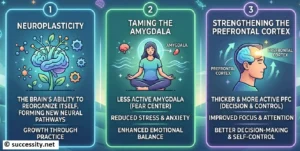
The most fascinating part of the science of meditation is its ability to physically change your brain. This isn’t just a feeling; it’s biology. The process is called neuroplasticity—the brain’s ability to reorganize itself by forming new neural connections.
Neuroplasticity – Rewiring Your Brain for Happiness
Think of your brain like a muscle. The more you use certain neural pathways, the stronger they become. When you constantly worry, you strengthen your “worry” pathways. When you practice meditation, you strengthen pathways associated with calm, focus, and compassion. You are literally rewiring your brain for better mental health.
Taming the Amygdala (Your Brain’s Fear Center)
The amygdala is your brain’s internal smoke detector. It’s always scanning for threats, and in people with anxiety, it can be overactive. Research has shown that consistent mindfulness practice can actually shrink the amygdala. A less reactive amygdala means you’re less likely to be hijacked by feelings of fear and anxiety.
Strengthening the Prefrontal Cortex (Your Brain’s CEO)
While the amygdala shrinks, the prefrontal cortex—your center for rational thinking, awareness, and decision-making—grows stronger. A more developed prefrontal cortex helps you override the amygdala’s knee-jerk reactions, leading to more balanced and thoughtful behavior.
Mindfulness vs. Meditation – What’s the Difference?
You’ve likely heard the words “mindfulness” and “meditation” used together, sometimes even interchangeably. While they are deeply connected, they aren’t exactly the same thing. Understanding the distinction can make your practice much clearer and more effective.
Think of it like fitness:
What is Meditation? (The Formal Practice)
Meditation is the workout. It is the dedicated, intentional time you set aside to train your mind. When you sit on a cushion, close your eyes, and focus on your breath for ten minutes, you are meditating. It’s the formal act of practice, the “reps” you do to build your mental muscles of focus and awareness. There are many types of meditation (like Loving-Kindness or Body Scan), just as there are many types of workouts (like weightlifting or cardio).
What is Mindfulness? (The Resulting Quality of Mind)
Mindfulness is the fitness. It’s the state of non-judgmental awareness that you can carry with you throughout your entire day. It’s the result of your training. Mindfulness is when you’re fully present while drinking your morning coffee, truly tasting it instead of mentally rehearsing your to-do list. It’s when you listen to a friend without planning what you’ll say next. It’s the calm, centered awareness that becomes more accessible both on and off the cushion.
How They Work Together
Meditation is the primary tool we use to cultivate mindfulness. The formal practice of meditation for mental health strengthens your ability to be mindful in everyday life. The more you practice sitting and noticing your thoughts during meditation, the easier it becomes to notice your stress rising during a difficult meeting and choose how to respond. In short: Meditation is the training; mindfulness is the goal.
Getting Started – A Practical Guide to Meditation for Beginners
Convinced but not sure how to start meditating? It’s simpler than you think. There is no “perfect” way to do it. The best meditation is the one you actually do.
Choosing Your Style – Types of Meditation for Mental Health
There are many paths up the same mountain. Here are a few popular styles perfect for beginners:
- Mindfulness Meditation: This is the foundation. The goal is to focus on an anchor—usually your breath—and simply notice when your mind wanders, gently guiding it back without judgment. It’s incredibly effective for building awareness and presence.
- Guided Meditation: If sitting in silence sounds daunting, guided meditation for mental health is your best friend. An instructor’s voice walks you through the entire process, giving you specific things to focus on, which can be immensely helpful when you’re starting out.
- Loving-Kindness (Metta) Meditation: This practice involves silently repeating phrases of goodwill and compassion for yourself and others (e.g., “May you be happy. May you be safe.”). It’s a powerful antidote to self-criticism and helps cultivate a sense of connection.
- Body Scan Meditation: This involves bringing your attention to different parts of your body, from your toes to the top of your head, simply noticing any sensations without trying to change them. It’s fantastic for releasing physical tension and connecting your mind and body.
Your First 5-Minute Meditation – A Simple Step-by-Step Practice
Ready to try? Let’s do it right now.
- Find a Quiet Space: You don’t need a special cushion or a silent retreat. Just find a spot where you won’t be disturbed for five minutes.
- Set a Timer: Use your phone or a kitchen timer. This removes the anxiety of wondering how much time has passed, letting you relax into the practice.
- Sit Comfortably: Forget the lotus position unless it’s genuinely comfortable for you. Sit in a chair with your feet flat on the floor and your back straight but not stiff. Let your hands rest in your lap.
- Focus on Your Breath: Close your eyes or soften your gaze. Bring your attention to the sensation of your breath. Feel the air moving in through your nose and out through your mouth. Don’t try to change it; just observe it.
- Gently Acknowledge Wandering Thoughts: Your mind will wander. It will think about your to-do list, an email you forgot to send, or what to have for dinner. This is not a failure; it’s the entire point of the practice. When you notice your mind has wandered, gently and kindly say, “thinking,” and guide your focus back to your breath. Every time you do this, you are doing a rep for your brain.
That’s it. You just meditated.
How Long and How Often Should You Meditate?
Consistency is far more important than duration. Start with just 3-5 minutes a day. It’s better to meditate for 5 minutes every day than for 30 minutes once a week. Once the habit is established, you can gradually increase the time if you wish.
Overcoming Common Challenges in Your Meditation Practice

Your meditation journey won’t always be a straight line to bliss. Here are a few common hurdles and how to navigate them.
“I Can’t Stop Thinking!” – The Myth of an Empty Mind
This is the number one misconception about meditation. The goal is not to stop your thoughts—that’s impossible. The goal is to change your relationship with them. You are learning to sit in the director’s chair of your mind, watching the thoughts come and go on the screen without getting lost in the drama.
Finding Time in a Busy Schedule
You don’t find time; you make time. Try “habit stacking”—tack on your 5-minute meditation to an existing daily habit. For example: “Right after I finish my morning coffee, I will meditate for 5 minutes.”
Dealing with Restlessness and Discomfort
It’s normal to feel fidgety or antsy. Your body and mind are used to constant stimulation. Instead of fighting the restlessness, just notice it. Acknowledge it with curiosity: “Ah, there’s that restless feeling again.” Often, simply observing it can help it dissolve on its own.
Beyond the Cushion – Bringing Mindfulness into Your Everyday Life
The goal of meditation isn’t just to be calm for the ten minutes you’re sitting in silence. The real magic happens when you take that awareness and apply it to the other 23+ hours of your day. This is where the practice transforms from a simple exercise into a way of life, profoundly impacting your mindfulness and mental health.
You don’t need more time in your day to do this. You just need to bring a new quality of attention to the things you’re already doing.
Mindful Moments – The 3-Breath Reset
This is a powerful “micro-meditation” you can do anywhere, anytime. When you feel stress rising, or just want to ground yourself, pause and try this:
- Take a deep, slow breath in, noticing the air fill your lungs.
- Hold it for a moment, then exhale slowly, releasing any tension.
- Repeat two more times. This simple act can reset your nervous system and pull you out of a reactive spiral in under a minute.
Mindful Activities – Turning Chores into Practice
You can transform mundane tasks into opportunities for mindfulness. When you’re washing the dishes, for example, instead of letting your mind race, bring your full attention to the task. Feel the warmth of the water on your hands. See the iridescent soap bubbles. Hear the clink of the plates. By focusing on these sensory details, you anchor yourself in the present moment. This can be done with brushing your teeth, folding laundry, or making your bed.
Mindful Communication – Listening with Full Attention
How often in a conversation are we just waiting for our turn to speak? Mindful communication involves truly listening. When someone is talking, give them your full attention. Notice their tone of voice, their body language. Listen to their words without judgment and without formulating your response while they are still talking. This not only reduces misunderstandings but also deepens your connection with others.
Mindful Walking – A Moving Meditation
If you struggle with the stillness of sitting meditation, mindful walking can be a fantastic alternative. Whether you’re walking to your car or just down the hallway, bring your attention to the physical sensations of movement. Feel your feet making contact with the ground—heel, ball, toes. Notice the gentle sway of your arms and the feeling of the air on your skin. This is a perfect way to integrate a calming practice into your busy schedule.
Tools and Resources to Support Your Journey
You don’t have to do this alone. There are amazing resources available to help you build a consistent practice.
Top Meditation Apps for Mental Health
- Calm: Known for its sleep stories and soothing guided meditations.
- Headspace: Offers structured, beginner-friendly courses to teach you the fundamentals.
- Insight Timer: A massive library of free guided meditations from thousands of teachers.
Recommended Guided Meditations
A simple search on YouTube for “10-minute guided meditation for anxiety” or “5-minute mindfulness meditation” will yield thousands of high-quality, free options to get you started.
When to Seek Professional Help
Important Disclaimer: While the benefits of meditation are significant, it is a supportive tool, not a replacement for professional mental healthcare. If you are struggling with a serious mental health condition, please consult a therapist, psychologist, or doctor. They can help you integrate meditation into a comprehensive treatment plan.
Final Thoughts – Your Path to a Calmer Mind Starts Now
Improving your mental health isn’t about making one giant leap; it’s about taking small, consistent steps. Meditation is one of the most accessible and powerful steps you can take. It’s a gift you can give yourself every single day—a few minutes of intentional stillness that can ripple outward, bringing more calm, focus, and compassion into every area of your life.
You don’t need anything special to begin. You just need your breath and a willingness to try. Your journey to a healthier, more peaceful mind starts with a single, conscious breath.
Call to Action: Why not start right now? Find a quiet chair, set a timer for three minutes, and just focus on your breath. See how you feel.
Frequently Asked Questions (FAQ)
How long does it take for meditation to help my mental health?
You might feel a sense of calm and relaxation after your very first session. However, noticeable and lasting changes in things like anxiety and emotional regulation often become apparent after about 8 weeks of consistent, daily practice.
Can meditation ever make anxiety worse?
For some people, sitting in silence can initially heighten their awareness of anxious thoughts, which can feel uncomfortable. This is usually temporary. Starting with very short sessions (1-3 minutes) or using guided meditations can provide more structure and make the process feel safer and more manageable.
What is the best type of meditation for anxiety?
Mindfulness meditation and guided meditations are often recommended as the best starting points for anxiety. They provide a clear anchor for your attention—either your breath or a guide’s voice—which helps prevent your mind from getting lost in anxious thought loops.
Do I need to be religious or spiritual to meditate?
Absolutely not. This guide focuses on secular meditation, which is approached as a form of mental training and a practical tool for well-being. It is accessible and beneficial to everyone, regardless of their personal beliefs or spiritual background.
About the Author