Sophia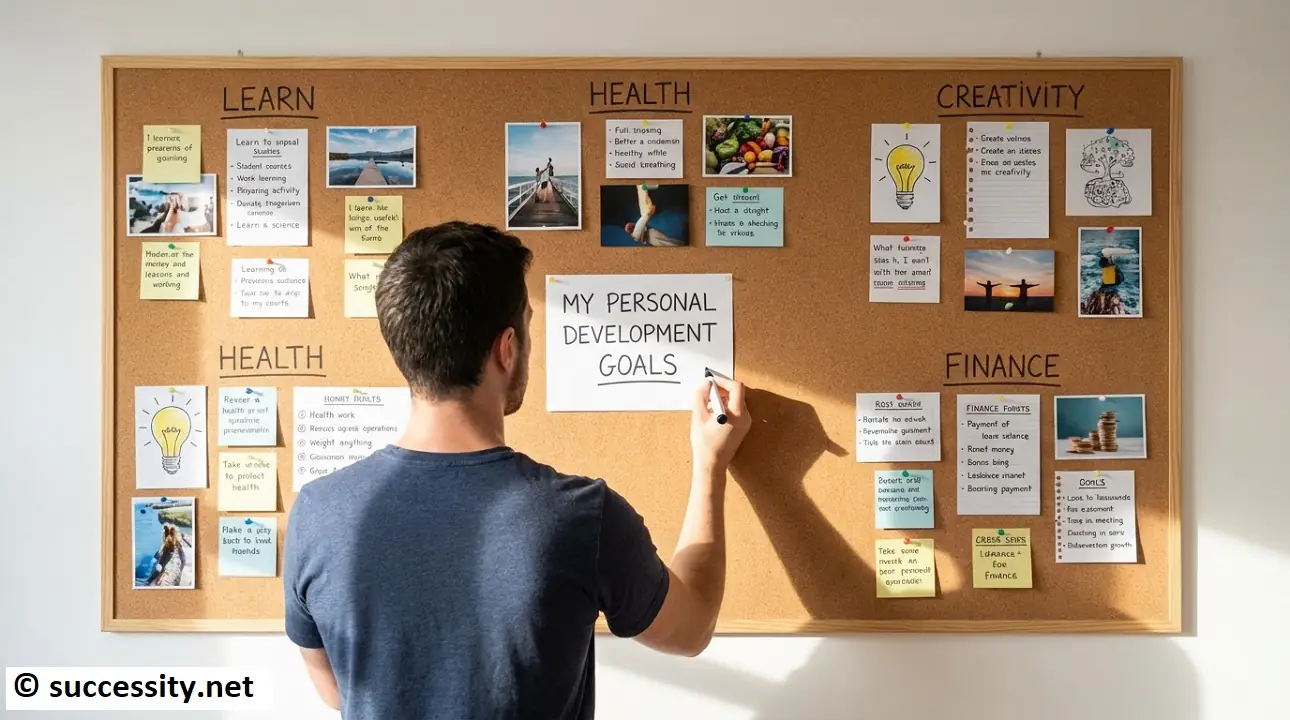
Ever feel like you’re running on a treadmill? You’re busy, you’re moving, but you aren’t actually getting anywhere new. It’s a common feeling in our fast-paced world—the sense that you’re going through the motions without a clear direction.
What if you could trade that feeling for a sense of purpose and progress?
That’s where personal development goals come in. They are the compass that turns aimless motion into an intentional journey. This isn’t about chasing perfection; it’s about making a conscious choice to invest in your most valuable asset: you.
This guide will provide you with a complete, step-by-step framework for setting powerful self-improvement goals that stick. We’ll explore actionable examples and give you the tools you need to create your own personal development plan for a more fulfilling life.
What Are Personal Development Goals? (And Why They Matter)
Let’s start with a simple definition. Personal development goals are specific objectives you set to improve your skills, knowledge, character, and overall quality of life. They are the building blocks of personal growth, focusing on what you want to become, not just what you want to have.
While a professional goal might be to get a promotion, a related personal development goal might be “to become a more confident and persuasive public speaker” to help you earn that promotion. See the difference? One is an outcome, the other is a transformation.
The Core Benefits of Setting Personal Growth Goals
Investing the time to set these goals pays incredible dividends. Here’s why it matters:
- Provides Direction and Clarity: Goals give you a destination. Instead of drifting, you have a clear “why” that guides your daily decisions.
- Boosts Motivation and Focus: When you know what you’re working toward, it’s easier to stay motivated and ignore distractions. Your goals become a filter for what is and isn’t important.
- Increases Self-Awareness and Confidence: The process of setting goals forces you to look inward. As you start achieving small wins, your self-esteem and confidence naturally grow.
- Enhances Your Skills and Knowledge: Whether you’re learning a new language or how to manage your finances, personal development goals directly expand your capabilities.
- Improves Your Well-being: By focusing on areas like health, mindfulness, and relationships, you actively improve your mental and physical wellness, leading to a happier life.
Connecting Goals to Your Core Values – The “Why” Behind the “What”
Before you jump into writing down a long list of goals, let’s pause for a crucial step that most people skip: understanding your “why.” A goal without a deep, personal reason behind it is like a tree with shallow roots—the first strong wind of difficulty will knock it over.
Your core values are your internal compass. They are the principles that are most important to you, like “creativity,” “adventure,” “community,” “security,” or “learning.” When your personal development goals are aligned with these values, they become infused with meaning and purpose. This intrinsic motivation is far more powerful than willpower alone.
How to Identify Your Core Values (A Quick Exercise)
Don’t know your values off the top of your head? No problem. Grab a pen and paper and try this:
- List Your Peak Moments: Write down 2-3 times in your life when you felt truly alive, proud, or fulfilled. What were you doing? Who were you with?
- Identify the Feelings: For each moment, describe the core feeling or principle at play. Was it a sense of connection? Freedom? Achievement? Competence?
- Look for Themes: Circle the words and ideas that repeat. These are strong clues to your core values.
Once you have a list of 3-5 core values, you can use them as a filter. Before committing to a goal, ask yourself: “Does pursuing this goal help me express one of my core values?”
- If your value is Adventure, a goal like “Save money to travel to a new country” will feel more exciting than “Increase my 401k contribution.”
- If your value is Community, a goal like “Volunteer at the local animal shelter” will be more fulfilling than “Learn to code alone in my room.”
This alignment ensures you’re not just chasing achievements, but building a life that feels authentically yours.
How to Set Powerful Personal Development Goals – A 5-Step Framework
Ready to get started? A goal without a plan is just a wish. This simple five-step framework will help you build a solid foundation for success.
Step 1 – Start with Self-Reflection and Assessment
You can’t know where you’re going until you know where you are. Take some quiet time to get honest with yourself. A journal is a great tool for self-reflection.
Ask yourself these questions:
- What skills do I wish I had?
- What part of my daily routine feels draining or unfulfilling?
- What weaknesses or fears are holding me back?
- If I could improve one thing about myself, what would it be?
- What topics or activities make me feel curious and energized?
Step 2 – Identify Your Key Growth Areas
Based on your reflection, start categorizing where you want to grow. Don’t try to change everything at once! Pick one or two key areas to focus on initially. Common areas include:
- Career & Professional Skills
- Mind & Intellectual Growth
- Health & Wellness
- Finances
- Relationships & Social Skills
Step 3 – Make Your Goals SMART
This is the most critical step for turning a vague desire into an achievable objective. The SMART goals framework ensures your goals are clear and measurable.
- S – Specific: What exactly do you want to accomplish? Who is involved? Where will it happen?
- M – Measurable: How will you track your progress? How will you know when you’ve reached your goal?
- A – Achievable: Is this goal realistic for you right now? Do you have the resources (or a plan to get them)?
- R – Relevant: Does this goal truly matter to you? Does it align with your overall values and life vision?
- T – Time-bound: What is your deadline? When will you work on this?
Let’s see it in action:
- Vague Goal: “I want to be healthier.”
- SMART Goal: “I will improve my cardiovascular health by running a 5k race in 12 weeks. I will achieve this by following a beginner’s running plan, training three times per week (Monday, Wednesday, Friday) for 30-45 minutes.”
Step 4 – Create a Personal Development Plan

Your personal development plan is your roadmap. Break your big SMART goal down into smaller, bite-sized actions.
If your goal is to read 20 books this year, your plan might include:
- Create a list of 20 books I want to read.
- Schedule 20 minutes of reading time every weekday before bed.
- Join the local library or sign up for an audiobook service.
- Track my progress in a reading journal.
Step 5 – Track Your Progress and Stay Accountable
Momentum is everything. Regularly reviewing your progress keeps you motivated and allows you to adjust your plan if needed.
- Use a Habit Tracker: Apps like Habitica or a simple notebook can provide a visual of your consistency.
- Schedule Check-ins: Put a “goal review” on your calendar once a week or once a month.
- Find an Accountability Partner: Share your goal with a trusted friend and agree to check in on each other’s progress.
50+ Examples of Personal Development Goals (Categorized for Your Life)
Need some inspiration? Here are over 50 examples of personal growth goals across different areas of life.
Goals for Your Career & Professional Life
- Become a better public speaker by joining a Toastmasters club.
- Learn a new, in-demand skill (like basic SQL or graphic design) through an online course this quarter.
- Read one industry-related book per month.
- Find a mentor in your field and meet with them once a month.
- Improve your time management by consistently using a technique like the Pomodoro Method.
- Earn a professional certification in your industry within the next year.
- Actively expand your professional network by connecting with 5 new people on LinkedIn each week.
- Learn to manage conflict more effectively by taking a workshop on difficult conversations.
- Become the go-to person for a specific skill in your office.
- Build a professional portfolio website to showcase your work.
Goals for Your Mind & Intellectual Growth
- Learn the basics of a new language by practicing on an app for 15 minutes daily.
- Read 20 books this year across at least 5 different genres.
- Take an online course on a topic you’re purely curious about, like astronomy or ancient history.
- Learn to play a musical instrument like the guitar or piano.
- Practice mindfulness or meditation for 10 minutes each morning to improve focus.
- Start a daily journaling practice to increase self-awareness.
- Do a crossword puzzle or Sudoku daily to keep your mind sharp.
- Learn to code a simple website using free online resources.
- Watch one educational documentary per week instead of a fictional series.
- Develop a deeper understanding of a complex topic, like behavioral economics or artificial intelligence.
Goals for Your Health & Wellness
- Exercise for 30 minutes, 4 times per week.
- Cook one new, healthy recipe each week to expand your cooking skills.
- Get 7-8 hours of quality sleep every night.
- Drink 2-3 liters of water per day.
- Start a regular yoga or stretching routine to improve flexibility and reduce stress.
- Reduce your processed sugar intake by half within the next 3 months.
- Go for a 30-minute walk during your lunch break three times a week.
- Practice a digital detox by putting your phone away for one hour before bed.
- Complete a 30-day fitness challenge.
- Learn proper weightlifting form from a personal trainer.
Goals for Your Finances
- Create a detailed monthly budget and stick to it for 3 consecutive months.
- Build an emergency fund that covers 3 months of living expenses.
- Read two highly-rated books on personal finance this year.
- Automate 10% of your income into a savings or investment account.
- Pay off a specific credit card in full within the next 6 months.
- Learn the fundamentals of investing through an online course.
- Track every single expense for 30 days to understand your spending habits.
- Have a “no-spend” weekend once a month.
- Increase your income by starting a small side hustle.
- Review and negotiate your monthly bills (like phone and internet) to cut costs.
Goals for Your Relationships & Social Skills
- Practice active listening in conversations by summarizing what the other person said before you respond.
- Reconnect with an old friend by scheduling a call or coffee once a month.
- Volunteer for a cause you believe in to meet like-minded people.
- Set and maintain healthy boundaries with family or colleagues.
- Give one genuine compliment to a stranger every day for a week.
- Improve your emotional intelligence by learning to identify your emotional triggers.
- Remember people’s names by using a memory technique.
- Initiate plans with friends instead of waiting to be invited.
- Put your phone away completely when you’re having a meal with someone.
- Write one thank-you note each week to someone you appreciate.
The Secret to Long-Term Success – Building Systems, Not Just Setting Goals
Goals are fantastic for setting a direction, but they have a surprising downside: you spend most of your time in a state of pre-success failure. If your goal is to run a marathon, you are technically “failing” at that goal every single day until you cross the finish line. This can be demotivating.
This is why successful people focus on a different approach: they build systems based on habits.
As author James Clear famously wrote, “You do not rise to the level of your goals. You fall to the level of your systems.”
- A goal is a result you want to achieve (e.g., “lose 20 pounds”).
- A system is the process you follow that leads to that result (e.g., “eat a protein-rich breakfast, walk for 30 minutes at lunch, and remove junk food from the house”).
The beauty of a system is that it delivers results on its own. You commit to the process, not the outcome. This removes the pressure of the big, scary goal and allows you to focus on simply executing the next small step.
Turning Your Goals into Systems
Here’s how to reframe some of the goals we listed earlier into powerful systems:
- Goal: Read 20 books this year.
- System: Place a book on my pillow every morning and read for 15 minutes before I go to sleep each night.
- Goal: Learn to speak Spanish.
- System: Listen to a Spanish podcast during my morning commute and do two Duolingo lessons during my lunch break.
- Goal: Build a $5,000 emergency fund.
- System: Set up an automatic transfer of $100 to a high-yield savings account every Friday morning.
When you focus on the system, the goal takes care of itself. You’re building the habits of the person who naturally achieves those things.
Tools & Resources to Support Your Personal Development Journey
You don’t have to do it alone! Here are some excellent resources:
- Apps:
- Notion/Todoist: For planning and organizing your goals.
- Habitica/Streaks: For tracking daily habits in a fun way.
- Headspace/Calm: For building a meditation practice.
- Duolingo: For learning a new language.
- Books:
- Atomic Habits by James Clear: The master guide to building good habits and breaking bad ones.
- The 7 Habits of Highly Effective People by Stephen Covey: A classic on principles for personal and professional effectiveness.
- Mindset by Carol S. Dweck: On developing a growth mindset essential for learning and resilience.
- Podcasts:
- The Tim Ferriss Show: Deep-dive interviews with world-class performers.
- Feel Better, Live More: Actionable advice on health and well-being.
Overcoming Common Roadblocks on Your Personal Growth Journey
The path to self-improvement is never a straight line. It’s filled with twists, turns, and the occasional pothole. Knowing how to navigate these common challenges is the key to resilience and long-term success.
The Trap of Procrastination
Procrastination is rarely about laziness; it’s often rooted in fear—fear of failure, fear of not being good enough, or simply feeling overwhelmed.
- The Solution: The 2-Minute Rule. Coined by David Allen, the rule is simple: if a task takes less than two minutes to complete, do it immediately. For larger goals, scale it down. Want to start a running habit? Your task for today is just to “put on your running shoes and stand outside for two minutes.” This tiny first step makes it infinitely easier to keep going.
Dealing with a Lack of Motivation
Motivation is a fair-weather friend. It’s exciting and present when you start, but it often disappears when things get tough. You cannot rely on it.
- The Solution: Rely on Discipline and Ritual. Discipline is doing what you need to do, even when you don’t feel like it. Create a ritual around your habit. For example, if your goal is to write, your ritual could be: “Every morning at 8 AM, I make a cup of tea, sit at my desk, and open my laptop.” The ritual triggers the action, regardless of how motivated you feel.
The Challenge of Perfectionism
Perfectionism paralyzes progress. The desire to create the “perfect” plan or wait for the “perfect” time prevents you from ever starting.
- The Solution: Embrace “Good Enough.” Give yourself permission to be a beginner. Your first attempt at anything—a new workout, a new language, a new skill—will be messy. That’s okay. The goal is progress, not perfection. Focus on showing up consistently, and you can refine your approach as you go.
Navigating Burnout and Overwhelm
Trying to change too much too fast is the quickest path to burnout. When your to-do list feels impossibly long, it’s easy to give up entirely.
- The Solution: Celebrate Small Wins and Schedule Rest. Break your goals into the smallest possible steps and celebrate when you complete one. Finishing a single 20-minute workout is a win. Reading one chapter is a win. These small victories build momentum. Equally important, schedule rest and recovery. Personal development is a marathon, not a sprint.
Final Thoughts – Your Journey Starts Now
Personal development is not a one-time event; it’s a lifelong commitment to growth. It begins with the simple but profound decision to take ownership of your future.
By using this guide, you can move from wishing to doing. Start with self-reflection, create a clear and actionable SMART goal, and build a plan to make it happen. Remember that every small step you take is a vote for the person you want to become.
So, what’s one small step you can take today?
What is the #1 personal development goal you’re excited to work on this year? Share it in the comments below!
Your Personal Development Questions Answered
How often should I set personal development goals?
It’s great to set larger goals on an annual or quarterly basis. Then, break them down into monthly and weekly objectives. The key is to review them regularly to ensure they are still relevant.
What is the difference between a goal and a personal development plan?
A goal is the destination—what you want to achieve (e.g., “run a 5k”). The personal development plan is the map—the specific steps, habits, and timeline you’ll follow to get there (e.g., “train 3 times a week, follow this plan…”).
What if I fail to achieve my goal?
Failure is not an endpoint; it’s a data point. If you miss a goal, don’t beat yourself up. Instead, get curious. Was the goal too ambitious? Was your plan flawed? Did your priorities change? Learn from the experience, adjust your approach, and try again.
How do I stay motivated when I lose momentum?
Motivation naturally ebbs and flows. This is why systems are more important than motivation. Reconnect with your “why.” Remind yourself why you set this goal in the first place. Break the next step down into an incredibly small action—so small you can’t say no. Sometimes, just taking one tiny step is enough to reignite your momentum.
About the Author