Sophia
Do you ever get that feeling—a quiet but persistent sense that you’re capable of more? It’s the feeling of being stuck in a routine, knowing you have untapped potential but not knowing which key will unlock it. If that sounds familiar, you’re not alone. The desire for growth is a fundamental part of being human, but turning that desire into real, lasting change can feel overwhelming.
Welcome to the world of self improvement.
This isn’t about overnight transformations or chasing an illusion of perfection. True personal development is a continuous journey, a series of small, intentional steps that compound over time to create a life of greater purpose, achievement, and fulfillment. It’s about building a better you, one day at a time.
In this guide, we’ll break down 10 powerful and proven self growth strategies that will serve as your roadmap. Forget vague advice. These are actionable steps you can start implementing today to build momentum, overcome obstacles, and begin achieving success on your own terms.
1. Cultivate a Growth Mindset – The Foundation of All Progress
Before you can change your habits, you have to change your mind. The concept of a growth mindset, pioneered by psychologist Carol Dweck, is the absolute bedrock of self improvement.
- What it is: It’s the core belief that your abilities, intelligence, and talents are not fixed traits. They are skills that can be developed through dedication, effort, and learning. Think of your brain as a muscle—the more you challenge it, the stronger it gets. This is the opposite of a “fixed mindset,” which assumes you’re either born good at something or you’re not.
- Why it’s crucial: A growth mindset transforms how you see the world. Challenges are no longer threats to be avoided; they are opportunities to learn. Failure isn’t a verdict on your worth; it’s invaluable feedback. This mental shift is what gives you the resilience to keep going when things get tough.
Actionable Tips to Build a Growth Mindset
- Embrace Challenges, Don’t Avoid Them: The next time you face a difficult project at work or a complex problem in your life, lean into it. See it as a workout for your brain.
- Reframe Your Inner Monologue: Catch yourself when you think, “I can’t do this.” Rephrase it to, “I can’t do this yet.” That one simple word opens the door to possibility and growth.
- Focus on the Process, Not Just the Outcome: Instead of only celebrating the A+ or the finished project, take pride in the effort, the strategies you tried, and the persistence you showed along the way.
2. Set Crystal-Clear, Actionable Goals (The SMART Way)
“I want to be more successful” is a wish, not a goal. To make genuine progress, your ambitions need a framework. This is where SMART goals come in.
- What it is: SMART is an acronym that stands for Specific, Measurable, Achievable, Relevant, and Time-bound. It’s a system for turning vague desires into a concrete plan of attack.
- Why it’s crucial: Clarity is power. When you know exactly what you’re aiming for and how you’ll measure it, your focus sharpens dramatically. SMART goals eliminate ambiguity and provide a clear finish line, which is incredibly motivating.
Actionable Tips for Setting SMART Goals
- Be Unmistakably Specific: Don’t say, “I want to get in shape.” Say, “I will go to the gym three times a week for 45 minutes and be able to run a 5k without stopping.”
- Break It Down into Micro-Steps: A goal to “write a book in one year” is daunting. A goal to “write 300 words every day” is manageable. Divide your big goals into small, weekly or daily tasks that you can actually accomplish.
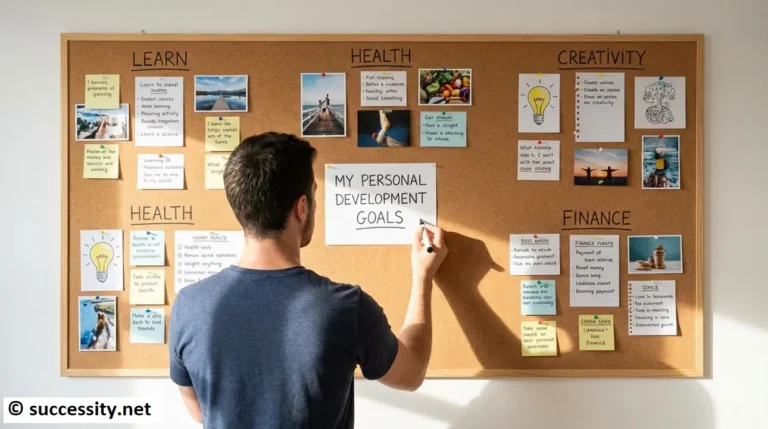
- Write Them Down and Keep Them Visible: Put your goals on a sticky note on your monitor, on your bathroom mirror, or as your phone’s lock screen. A goal that is out of sight is often out of mind.
3. Build Keystone Habits for Automatic Progress
Success isn’t born from rare bursts of motivation; it’s the product of your daily habits. As author James Clear puts it in Atomic Habits, “You do not rise to the level of your goals. You fall to the level of your systems.” Your systems are your habits.
- What it is: Keystone habits are small, foundational routines that create a positive ripple effect, making it easier to build other good habits. For example, making your bed in the morning is a small win that can lead to a cleaner room, which can lead to a more organized mindset for the rest of the day.
- Why it’s crucial: These are the ultimate habits for success because they automate your progress. By focusing on one or two keystone habits, you create a chain reaction of positive change without depleting your willpower on a dozen different things at once.
Actionable Tips for Building Keystone Habits
- Start Absurdly Small (The 2-Minute Rule): Want to build a reading habit? Start by reading one page a night. Want to meditate? Start with one minute. Make the habit so easy to start that you can’t say no.
- Use Habit Stacking: Anchor your new desired habit to an existing one. For example: “After I brush my teeth (existing habit), I will stretch for two minutes (new habit).”
- Track Your Progress and Don’t Break the Chain: Use a calendar or a habit-tracking app. Each day you complete your habit, mark it with an ‘X’. Your goal is to build a chain of X’s. The visual momentum becomes a powerful motivator.
4. Commit to Lifelong Learning

Your formal education may have ended, but your learning journey never should. In a rapidly changing world, the commitment to being a student for life is one of the most critical personal growth tips you can adopt.
- What it is: It’s the proactive and voluntary pursuit of knowledge and skills for either personal or professional reasons. It’s about staying curious and recognizing that there is always more to learn.
- Why it’s crucial: Lifelong learning keeps you adaptable, relevant, and valuable. It opens your mind to new ideas, prevents stagnation, and equips you with the tools to solve new problems. People who learn continuously are better positioned for new opportunities.
Actionable Tips for Lifelong Learning
- Read Voraciously: Aim to read at least one book a month. Mix it up with non-fiction, biographies, industry-specific books, and even fiction to expand your perspective.
- Turn Your Commute into a Classroom: Use podcasts and audiobooks to learn about everything from marketing and finance to history and psychology while you drive or ride the train.
- Learn a High-Value Skill: Dedicate 30-60 minutes a day to learning a skill that can directly impact your career or life goals—like public speaking, data analysis, coding, or a new language.
5. Prioritize Your Physical and Mental Health
You can have the best goals and habits in the world, but if you’re running on empty, you won’t get very far. Your mind and body are the vehicles for your ambition. Neglecting them is like trying to win a race with flat tires.
- What it is: This means treating sleep, nutrition, exercise, and mental wellness as non-negotiable pillars of your success. It’s not a luxury; it’s a fundamental requirement for high performance.
- Why it’s crucial: Proper physical and mental health directly impacts your energy levels, focus, emotional regulation, and resilience. When you feel good, you perform better in every single area of your life.
Actionable Tips for Prioritizing Health
- Schedule Your Workouts Like a Business Meeting: Put them in your calendar. Protect that time. It’s an appointment with yourself that you cannot cancel.
- Make Sleep a Priority, Not a Leftover: Aim for 7-9 hours of quality sleep per night. Create a relaxing wind-down routine, avoid screens before bed, and make your bedroom a sanctuary for rest.
- Practice Mindfulness or Meditation: Just 5-10 minutes of daily meditation using an app like Calm or Headspace can significantly reduce stress, improve focus, and increase self-awareness.
6. Master Your Time with Effective Prioritization
Everyone gets the same 24 hours in a day. The difference between those who achieve great things and those who don’t often comes down to how they manage that time.
- What it is: Effective time management isn’t about doing more things; it’s about doing more of the right things. It’s the art of distinguishing between what is urgent and what is truly important.
- Why it’s crucial: Without clear priorities, you’ll spend your days reacting to other people’s demands instead of proactively moving toward your own goals. Mastering your time gives you a sense of control and ensures your daily efforts align with your long-term vision.
Actionable Tips for Mastering Your Time
- Identify Your “Big Rocks” First: At the start of each week, identify the 1-3 most important tasks (your “Big Rocks”) that will create the most progress toward your goals. Schedule time for them first, before your calendar fills up with smaller, less important tasks.
- Use Time Blocking: Instead of a simple to-do list, schedule blocks of time in your calendar for specific tasks. For example, “9:00 AM – 10:30 AM: Work on Project X report.” This protects your time for deep, focused work.
- Learn the Power of “No”: Every time you say “yes” to something, you are saying “no” to something else. Politely decline requests, meetings, and tasks that don’t align with your priorities.
7. Develop High-Level Emotional Intelligence (EQ)
Your technical skills and IQ might get you in the door, but your Emotional Intelligence (EQ) is what will determine how high you climb.
- What it is: EQ is the ability to understand, use, and manage your own emotions in positive ways, as well as the ability to recognize and influence the emotions of those around you. It encompasses self-awareness, self-regulation, empathy, and social skills.
- Why it’s crucial: High EQ is a super-skill for leadership, teamwork, negotiation, and building strong relationships. It allows you to navigate complex social situations and communicate more effectively, making you a more influential and respected individual.
Actionable Tips for Boosting Your EQ
- Practice Active Listening: In your next conversation, make a conscious effort to listen to understand, not just to reply. Pay attention to body language and tone, and ask clarifying questions.
- Conduct an “Emotional Audit”: Pause a few times throughout the day and ask yourself, “What am I feeling right now, and why?” This simple practice builds the muscle of self-awareness.
- Seek Constructive Feedback: Ask a trusted friend or mentor, “When I’m under pressure, how do I come across?” Be open to their feedback to identify blind spots in your emotional responses.
8. Step Outside Your Comfort Zone Deliberately

The magic of personal growth doesn’t happen when you’re comfortable. It happens right on the edge of your abilities, in the space where you feel a little uncertain and challenged.
- What it is: This means intentionally and regularly doing things that feel slightly scary or difficult. It’s about pushing your own boundaries in a controlled way to expand your capabilities.
- Why it’s crucial: Staying in your comfort zone is a recipe for stagnation. Every time you step out of it, you build confidence, develop resilience, and prove to yourself that you are more capable than you thought. This creates a positive feedback loop of growth.
Actionable Tips to Leave Your Comfort Zone
- Do One Small Thing That Scares You Each Week: This could be speaking up in a meeting, introducing yourself to someone new at an event, or taking on a project with a skill you haven’t mastered yet.
- Learn a Skill with a Performance Element: Sign up for a public speaking club like Toastmasters, take an improv class, or learn a musical instrument. These activities force you to perform under pressure.
- Travel Solo: Even a short solo trip to a nearby city forces you to be self-reliant, make decisions on your own, and interact with strangers, which is a powerful confidence builder.
9. Nurture Your Network and Relationships
No one achieves success in a vacuum. The people you surround yourself with have a profound impact on your mindset, your opportunities, and your overall trajectory in life.
- What it is: This is about more than just “networking.” It’s about building genuine, authentic relationships with people who inspire, support, and challenge you. As motivational speaker Jim Rohn famously said, “You are the average of the five people you spend the most time with.”
- Why it’s crucial: A strong network provides a support system during tough times, opens doors to opportunities you wouldn’t find on your own, and exposes you to new ideas that can accelerate your self improvement journey.
Actionable Tips for Nurturing Your Network
- Be a Giver, Not a Taker: Approach relationships with a “How can I help?” mentality. Make introductions, share useful articles, or offer your skills without expecting anything in return. This builds trust and goodwill.
- Find a Mentor (and Be a Mentor): Seek out someone who has already achieved what you want to achieve and ask for their guidance. In turn, find someone who is a few steps behind you and offer your help.
- Audit Your Inner Circle: Consciously evaluate who you spend your time with. Make an effort to connect more with people who are positive, ambitious, and aligned with your values.
10. Practice Regular Reflection and Review
You can’t improve what you don’t measure. Driving a car without looking at the dashboard is a recipe for disaster. The same is true for your life.
- What it is: Reflection is the practice of deliberately pausing to look back on your actions, decisions, and progress. It’s a scheduled check-in with yourself to ensure you’re still on the right path.
- Why it’s crucial: This is the feedback loop that makes all the other strategies work. Regular reflection allows you to celebrate your wins (which builds motivation), learn from your mistakes (which prevents you from repeating them), and make necessary course corrections to stay aligned with your goals.
Actionable Tips for Effective Reflection
- Start a 5-Minute Daily Journal: Before bed, write down three things: 1) What went well today? 2) What did I learn? 3) What could I have done better?
- Conduct a Weekly Review: Every Sunday evening, spend 20 minutes reviewing your past week’s calendar and accomplishments. Then, set your top 1-3 priorities for the week ahead.
- Ask Yourself Powerful Questions: During your review, ask deeper questions like, “What energized me this week?” and “What drained my energy?” Use the answers to shape a more fulfilling week ahead.
Your Journey Starts Now
The path of self improvement is not about reaching a final destination called “success.” It’s a lifelong commitment to growth, learning, and becoming a slightly better version of yourself every single day. The 10 strategies outlined here are not just a checklist; they are powerful tools to help you build a more intentional, resilient, and fulfilling life.
Don’t feel like you need to implement all of them tomorrow. That’s a recipe for burnout.
Instead, pick just one.
Which strategy resonates with you the most right now? Is it building a morning routine? Setting one SMART goal? Reaching out to a potential mentor? Choose one, and take the first, smallest possible step today. That’s how real change begins.
Which of these strategies will you start with? Share your first step in the comments below!
Frequently Asked Questions About Self Improvement
What is the first step to self-improvement?
The most crucial first step is developing self-awareness. You can’t improve what you don’t acknowledge. Start by honestly assessing your strengths, weaknesses, habits, and values. Journaling and asking for feedback from trusted friends are great ways to begin this process.
How long does it take to see results from personal development?
It varies, but consistency is far more important than intensity. You’ll likely feel small, positive shifts in your mindset and energy within a few weeks of consistent effort. Significant, visible changes in your life and career are the result of months and years of dedicated practice. Remember, it’s a marathon, not a sprint.
Can I work on multiple self-improvement strategies at once?
While it’s tempting to overhaul your life all at once, it’s often more effective to start small. Pick one or two key areas that will have the biggest impact—like cultivating a growth mindset and building one keystone habit. Master those, let them become automatic, and then gradually incorporate more strategies. This approach prevents overwhelm and builds lasting momentum.
About the Author