Sophia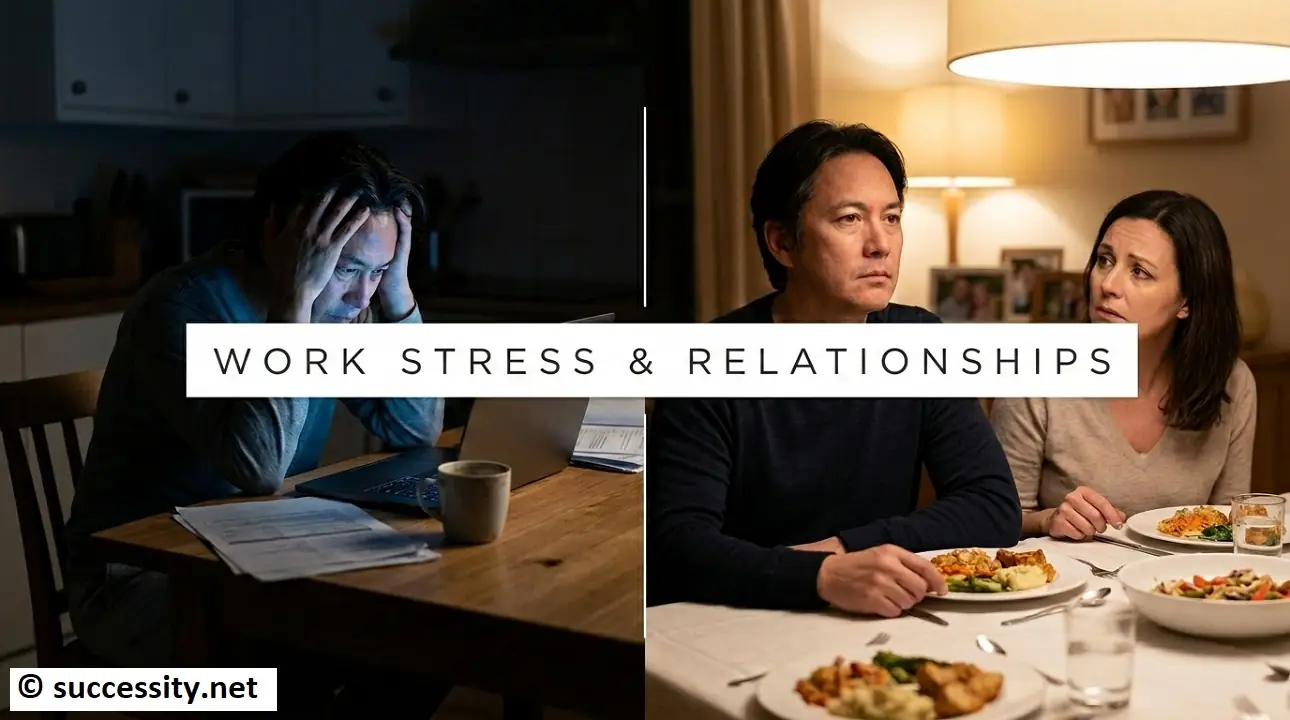
We have all been there. You walk through the front door (or close your laptop on the kitchen table), physically present but mentally miles away. Your partner asks a simple question – “How was your day?” or “What should we do for dinner?” – and you snap. Or maybe you don’t snap; maybe you just stare blankly, too emotionally bankrupt to engage in a conversation.
This is the silent killer of modern romance.
While financial struggles and infidelity often grab the headlines as marriage-enders, work stress and relationships have a connection that is just as dangerous, yet often overlooked. In a world of always-on connectivity, the boundary between “professional mode” and “partner mode” has dissolved.
If you feel like your job is becoming the third wheel in your marriage, you aren’t alone. But the good news? You can reclaim your relationship without quitting your job. Here is how to identify the “spillover effect” and actionable ways to leave work at the door.
The “Spillover Effect” – Why You Can’t Just Turn It Off
Psychologists have a specific term for what happens when your bad meeting at 2:00 PM ruins your date night at 7:00 PM: the Spillover Effect.
This concept describes the transfer of mood, stress, and behavior from one domain of your life (work) to another (home). It’s not just about being grumpy; it is physiological.
When you are stressed at work, your body releases cortisol and adrenaline. You enter a “fight or flight” state. This is useful for meeting a tight deadline, but it is terrible for intimacy. To connect with a partner, you need to be in a “rest and digest” state. If you walk into your living room with high cortisol levels, you are biologically primed to see threats rather than love. This usually manifests in two destructive ways:
- Withdrawal: You shut down. You scroll through social media for hours, hiding in a shell to “recharge,” leaving your partner feeling lonely and ignored.
- Conflict: You are on edge. Your patience meter is at zero, so a small annoyance (like socks on the floor) triggers a reaction disproportionate to the “crime.”
5 Signs Work Stress is Toxic to Your Relationship
How do you know if you are just having a bad week, or if the impact of work stress on your marriage has become chronic? Here are the red flags that indicate the balance has tipped.
1. The Endless “Venting” Loop
Communication is good, but there is a difference between sharing your day and dumping toxic energy on your partner. If 90% of your conversation revolves around your boss, your coworkers, or your deadlines, your relationship has become a secondary character in the drama of your career.
2. The “Third Wheel” Smartphone
If you are checking Slack in bed, answering emails during dinner, or taking calls during movie night, you are signaling to your partner that they are less important than your notification ping. This “technoference” is a major source of resentment in modern relationships.
3. Displaced Aggression
You had a terrible day. Your client yelled at you. You couldn’t yell back because you’d get fired. So, you come home and yell at your spouse because the dishwasher wasn’t loaded correctly. This is displaced aggression – using your partner as a safe emotional punching bag because they are the one person who *won’t* fire you.
4. Emotional Exhaustion and Intimacy
Burnout and relationships are a terrible mix. When you are burned out, you are emotionally depleted. Intimacy – whether sex, cuddling, or deep conversation – requires energy. If you are giving 100% of your energy to your employer, you have nothing left to give your partner but your exhaustion.
5. Lack of Empathy
When you are drowning in your own stress, it is incredibly hard to care about someone else’s. If your partner tells you about a problem they had and your internal reaction is, *”Who cares? That’s nothing compared to my day,”* work stress has eroded your empathy.
The Physiology of Disconnect – How Stress Kills Libido

One of the most immediate casualties of work stress is the bedroom. This isn’t just about being “too tired”; it is biological warfare happening inside your body.
When you are stressed about a project or a difficult boss, your body produces cortisol. Evolutionarily, cortisol is designed to help you survive danger. When your body thinks it is in danger, it shuts down “non-essential” functions to conserve energy. Unfortunately, your libido is considered non-essential for immediate survival.
This creates a painful cycle. You might want to be intimate to feel connected, but your body is physically resisting. This often leads to feelings of rejection for the partner initiating sex, and feelings of guilt for the stressed partner.
Understanding that this is a hormonal reaction, not a lack of attraction, is the first step in fixing it. You have to lower the cortisol (through relaxation or exercise) before you can raise the desire.
The Remote Work Factor – The WFH Challenge
The rise of remote work has complicated the equation. In 2025, many of us no longer have a commute. While avoiding traffic is great, the commute used to serve a vital psychological function: decompression.
It was a buffer zone where you could transition from “Employee” to “Partner.”
Without that physical separation, the lines blur. You might be arguing with a coworker on Zoom one minute and trying to parent a child or kiss your spouse three minutes later.
This lack of “role transitioning” makes the spillover effect almost immediate. If you WFH, you don’t just need to leave work at the door; you need to learn to leave it at the laptop screen.
The “Dual-Burnout” Scenario – When You Are Both Drowning
What happens when there is no “stable” partner? In many modern relationships, both people are chasing ambitious careers or dealing with high-pressure jobs simultaneously. This leads to what psychologists call “Competitive Suffering.”
It often starts innocently. Partner A says, “I had a crazy day, I skipped lunch.” Partner B retorts, “You think that’s bad? My boss just moved my deadline up by a week.”
Instead of supporting each other, you end up competing to see who is more exhausted to justify who “deserves” a break from chores or parenting duties. In this scenario, the relationship becomes a transactional negotiation of fatigue.
To survive dual-career burnout, you must stop viewing your exhaustion as a competition and start viewing the stress as a shared enemy you are teaming up against.
Actionable Strategies to Protect Your Relationship
You cannot always control your workload, but you can control how you manage the stress. Here are proven work-life balance tips for couples to stop the bleed.
1. Create a “Decompression Ritual”
You need a signal to your brain that the workday is over.
- If you commute: Use the drive to listen to a podcast or music, not to make more business calls. Do not walk through the front door until you have taken three deep breaths.
- If you work remotely: Change your clothes. It sounds simple, but changing from “work clothes” (even if it’s just a specific hoodie) into “leisure clothes” signals a shift in mindset. Close the laptop and go for a 15-minute walk outside before greeting your family. This “fake commute” resets your cortisol.
2. Implement the “20-Minute Vent Rule”
Venting is healthy; dwelling is not. Establish a rule with your partner: You get 15 to 20 minutes to complain about work when you first connect. Get it all out.
**Once the timer dings, work talk is banned for the rest of the night.** This protects your evening from being hijacked by office politics.
3. Establish Phone-Free Zones
You cannot bond with your partner if you are tethered to the office. Create sanctuary spaces where phones are forbidden.
- The Bedroom: Buy an old-school alarm clock and charge phones in the kitchen.
- The Dinner Table: No screens while eating.
This forces you to engage with the person in front of you.
4. Practice “Stress-Reducing Conversations”
Renowned relationship experts at The Gottman Institute suggest a specific way to handle end-of-day stress. The goal is **not to solve the problem**; it is to offer support.
- The Speaker: Complains about the stress (not the partner).
- The Listener: Does *not* offer advice or try to fix it. They simply say, “That sounds terrible,” “I’m on your side,” or “I get why you’re mad.”
We often stress each other out more by trying to offer logical solutions when the partner just wants emotional validation.
5. Schedule Non-Work Novelty
Stress makes life feel monotonous. Combat this by scheduling fun. Plan a date night where the strict rule is **no work talk**. Do something new – try a new restaurant, go for a hike, take a class. Novelty releases dopamine, which counteracts the stress hormones.
Dealing with the “Sunday Scaries” Together

For many couples, the work week doesn’t start on Monday morning – it invades on Sunday afternoon. The “Sunday Scaries” (or Sunday dread) is that sinking feeling of anxiety about the week ahead.
When one partner is gripped by this anxiety, it can ruin the only full rest day the couple has. You might become withdrawn, irritable, or unable to enjoy a Sunday dinner because you are mentally pre-playing Monday’s meetings.
To combat this, create a “Sunday Anchor.” Plan a specific, low-stress activity for Sunday evening – like watching a specific show, cooking a meal together, or a board game night.
This keeps your brain present in the weekend rather than letting it time-travel to Monday morning. By reclaiming Sunday night, you protect your relationship from losing 50% of your weekend to work anxiety.
How to Support a Partner Who is Stressed at Work
What if you aren’t the stressed one, but you are living with someone who is? Supporting a stressed partner is a delicate balance. You want to help, but you don’t want to become their therapist or punching bag.
- Ask the Magic Question: When your partner starts venting, ask: “Do you want to be heard, helped, or hugged?”
- Heard: They just want to vent.
- Helped: They want brainstorming and advice.
- Hugged: They need physical comfort and reassurance.
Most arguments happen because one partner gives advice when the other just wanted a hug.
- Pick Up the Slack (Temporarily): If they are in a “crunch week,” offer to take on their share of the chores for a few days. But be clear this is temporary: “I’ll handle dinner and the dishes this week so you can focus on that project.”
- Don’t Take the Withdrawal Personally: If they are quiet, it likely isn’t about you. Give them space to decompress without guilt-tripping them for being “boring.”
When to Seek Professional Help
Sometimes, a bubble bath and a date night aren’t enough. If work stress is leading to:
- Signs of clinical depression or anxiety.
- Increased substance use (drinking to “numb out” every night).
- Emotional abuse or constant hostility.
It is time to seek professional help. A therapist can help distinguish between a bad job and a deeper psychological issue. Career coaching can also be a “relationship saver” by helping the stressed partner find a healthier work environment.
Final Thoughts – Reclaiming the “We”
Your career is important. It provides security, purpose, and financial stability. But it should not come at the cost of the relationship that provides you with love and emotional safety.
Work stress will always exist. Deadlines will always loom. The goal isn’t to eliminate stress, but to build a levee that stops it from flooding your home. By setting boundaries, communicating your needs, and prioritizing your connection, you can ensure that no matter how hard the workday was, you have a soft place to land.
Frequently Asked Questions (FAQ)
Can work stress cause divorce?
Yes, chronic work stress is a significant predictor of marital breakdown because it erodes communication and intimacy. When partners constantly withdraw emotionally or displace their anger onto one another, the relationship’s foundation weakens over time.
What are the signs of work stress affecting relationships?
Common signs include constant irritability, a lack of sexual desire due to high cortisol levels, and the “spillover effect” where work complaints dominate every conversation. You may also notice “technoference,” where phones interrupt quality time.
How do I talk to my partner about their work stress?
Approach the topic with empathy using “I” statements like “I miss our relaxed time together” rather than accusing them of working too much. Focus on how the stress affects the relationship’s connection rather than attacking their career or ambition.
How can I leave work stress at the office?
Create a physical transition ritual, such as changing out of work clothes immediately or taking a 15-minute walk before engaging with family. This physical shift signals your brain to lower cortisol levels and switch from “employee mode” to “partner mode.”
When should couples seek therapy for work stress?
You should seek professional help if work stress leads to substance abuse, signs of clinical depression, or constant hostility at home. A therapist can help distinguish between a toxic work environment and deeper relationship issues.
About the Author