Sophia
Stress is a normal part of life, but when work deadlines, financial worries, family responsibilities, and everyday demands begin to pile up, it can become difficult to relax and think clearly. You might notice that your shoulders stay tense, your sleep becomes less restful, or even small problems feel harder to handle than usual.
Effective stress management is not about eliminating every source of pressure or forcing yourself to stay positive all the time. It is about learning how to respond to stressful situations, recognize your limits, and build habits that make everyday challenges easier to handle.
Some techniques can help you feel more settled during a difficult moment, while other strategies work gradually by improving your routines, reducing unnecessary demands, and helping you address recurring problems.
In this guide, you will learn practical stress management techniques, how to manage stress at work, and how to create a realistic plan that fits your daily life.
What Is Stress Management?
Stress management is the process of recognizing stress, understanding what contributes to it, and using practical strategies to cope with pressure more effectively. These strategies may include breathing exercises, physical activity, problem-solving, relaxation, and setting healthy boundaries.
The goal is not to prevent yourself from ever feeling stressed. Some stress is unavoidable, and a certain amount of pressure can help you prepare for challenges or respond to important situations.
The problem arises when stress becomes difficult to manage, continues for long periods, or begins to interfere with sleep, relationships, concentration, and everyday responsibilities.
Effective stress management involves three main approaches:
- Manage immediate stress: Use simple techniques to steady your attention and respond more thoughtfully during a difficult moment.
- Address recurring stressors: Identify the problems you can change and take realistic steps to reduce them.
- Build long-term resilience: Develop routines and support systems that help you cope with future challenges.
These approaches work together. A breathing exercise might help you settle before an important meeting, but resolving an unrealistic workload may require a conversation with your manager. Knowing which response fits the situation is an important part of managing stress effectively.
How Stress Affects Your Mind and Body
When you encounter a demanding situation, your body activates systems that prepare you to respond. Your heart rate may increase, your muscles may tense, and your attention may become focused on the immediate challenge.
These reactions can be useful in the short term. However, persistent stress can make it harder to relax and may affect your mood, sleep, concentration, and general well-being.
Common signs of stress include:
- Difficulty concentrating or making decisions.
- Irritability, frustration, or feeling overwhelmed.
- Muscle tension, headaches, or stomach discomfort.
- Changes in sleeping or eating habits.
- Feeling restless or unable to switch off after work.
- Withdrawing from activities or people you normally enjoy.
These symptoms do not automatically mean that stress is the cause. Other physical and mental health conditions can produce similar experiences.
Short-Term Stress vs. Ongoing Stress
Short-term stress often occurs in response to a specific situation, such as preparing for an interview, meeting a deadline, or having a difficult conversation. Once the situation passes, your stress may gradually settle.
Ongoing stress is different. It can develop when demands continue without enough opportunity for recovery or when a problem remains unresolved for an extended period.
For example, feeling nervous before a presentation is a common response to pressure. Feeling constantly tense because your workload is unmanageable is a different problem that may require changes to your working conditions, priorities, or support.
Recognizing this distinction helps you choose an appropriate response rather than treating every stressful experience as something you must simply tolerate.
Common Signs That Stress Is Affecting Your Daily Life
Stress can influence more than your mood. You might find yourself making avoidable mistakes, snapping at people, postponing important tasks, or relying on unhealthy habits to get through the day.
Pay attention to patterns rather than judging yourself for an occasional difficult day.
Ask yourself:
- Am I struggling to relax even when my responsibilities are finished?
- Has my sleep or concentration changed noticeably?
- Am I avoiding situations because they feel overwhelming?
- Do the same problems keep causing stress without being addressed?
- Is stress interfering with my relationships or daily responsibilities?
If these patterns persist, consider what needs to change and whether additional support would help.
Practical Stress Management Techniques You Can Use Right Away

When stress rises, it can be difficult to decide what to do next. You do not need a complicated routine to begin managing the situation. Start with a simple action that fits your circumstances.
The following techniques can help you pause, redirect your attention, or reduce tension. Their effects vary, so experiment with what feels comfortable and useful.
Try Slow, Comfortable Breathing
Breathing often becomes faster or shallower when you feel under pressure. Taking a moment to breathe slowly and comfortably can help you focus your attention and may reduce feelings of tension.
Try this simple exercise:
- Sit or stand in a comfortable position.
- Relax your shoulders and unclench your jaw.
- Breathe in gently through your nose if comfortable.
- Breathe out slowly without forcing the air from your lungs.
- Continue for a minute or two at a natural, comfortable pace.
There is no need to take unusually deep breaths or hold your breath. If you feel dizzy, uncomfortable, or more anxious, return to your normal breathing.
For more guidance, the NHS breathing exercises for stress explains a simple breathing approach you can practice regularly.
Use Grounding to Refocus Your Attention
When your thoughts keep jumping between problems, grounding can help bring your attention back to your immediate surroundings.
One option is the 5-4-3-2-1 exercise:
- Notice five things you can see.
- Notice four things you can physically feel.
- Identify three things you can hear.
- Notice two things you can smell, if possible.
- Identify one thing you can taste, if possible.
You do not have to complete the exercise perfectly. The purpose is to slow down and pay attention to what is happening around you instead of becoming absorbed in a cycle of worrying thoughts.
Grounding may be particularly useful when you feel distracted, overwhelmed, or caught up in anticipating what might go wrong.
Take a Short Break or Walk
Sometimes, the most useful response to stress is to step away briefly rather than push harder.
If possible, leave your desk, walk around the building, stretch gently, or spend a few minutes in a quieter environment. A short break can give you an opportunity to regroup before returning to a difficult task.
For example, if you have been staring at a complicated spreadsheet for an hour without making progress, take a brief walk and return with one specific goal: identify the first problem that needs solving.
A break will not remove every underlying stressor, but it can help you approach the next step with a clearer perspective.
Relax Tense Muscles
Stress can cause you to tighten your jaw, raise your shoulders, or grip objects without noticing.
A simple muscle-relaxation exercise can help you become more aware of this tension.
- Sit comfortably and take a moment to notice where your body feels tight.
- Gently tense one muscle group, such as your hands, for a few seconds if it feels comfortable.
- Release the tension and notice the difference.
- Repeat with another area, such as your shoulders or legs.
- Finish by allowing your body to rest naturally.
Avoid tensing any area that is painful or injured. You can also simply focus on releasing tension without deliberately tightening your muscles.
The National Center for Complementary and Integrative Health’s guide to relaxation techniques explains different relaxation approaches and why their effects can vary.
Long-Term Stress Management Strategies
Immediate coping techniques can help during difficult moments, but lasting improvement often requires changes to your everyday routines and the situations contributing to your stress.
You do not need to change your entire lifestyle at once. Start with manageable habits that address your most important needs.
Improve Your Sleep Routine
Poor sleep can make everyday challenges feel harder to manage. When you are tired, you may have less patience, find it harder to concentrate, and feel less equipped to deal with pressure.
To support better sleep:
- Keep a reasonably consistent bedtime and wake-up time.
- Create a quiet wind-down routine before bed.
- Reduce activities that keep you mentally engaged when you need to rest.
- Avoid consuming caffeine late in the day if it affects your sleep.
- Give yourself enough time to sleep rather than treating rest as an optional task.
You do not need a perfect evening routine. A few consistent changes are often more realistic than a long list of rules.
If sleep problems persist or significantly affect your daily life, consider discussing them with a healthcare professional.
Make Regular Physical Activity Part of Your Week
Movement can support both physical and mental well-being. Walking, cycling, swimming, dancing, and other activities you enjoy can provide a useful break from daily pressures.
Choose something that suits your current fitness level, schedule, and physical needs.
For example, you might take a 15-minute walk during lunch, walk with a friend after work, or stretch gently between tasks.
The key is consistency rather than intensity. If a demanding workout adds more pressure to your day, choose a simpler activity that you can maintain comfortably.
Practice Mindfulness and Self-Reflection
Mindfulness involves paying attention to the present moment without immediately judging every thought or feeling that arises.
You can practice it while walking, eating, washing dishes, or sitting quietly. Notice what you are doing, what you can sense, and when your attention drifts toward worries about the past or future.
Self-reflection offers another useful approach. At the end of a stressful day, write down:
- What caused the most stress today?
- Which parts of the situation could I influence?
- What helped me cope?
- What could I do differently next time?
These questions can reveal patterns and help you identify practical changes instead of repeatedly revisiting the same concerns.
If you want to develop a broader routine around these habits, explore how to build a self-care routine that sticks.
Maintain Supportive Social Connections
Trying to manage every problem alone can make stress feel more difficult to handle.
Talking to a trusted friend, family member, colleague, or other supportive person may help you organize your thoughts and see a situation from a different perspective.
You do not always need someone to solve the problem. Sometimes, explaining what is happening and feeling heard can make the next step clearer.
When you need practical help, be specific. Instead of saying, “Everything is too much,” you might ask a colleague to clarify a deadline or ask a family member to help with a particular responsibility.
Support does not remove every challenge, but it can make those challenges easier to navigate.
How to Manage Stress at Work and in Everyday Life

Stress is not always caused by how you think about a situation. Sometimes the workload is genuinely excessive, expectations are unclear, or you have more responsibilities than you can reasonably manage.
In these situations, relaxation techniques can help you cope, but addressing the underlying problem is equally important.
Identify Your Main Stress Triggers
A stress trigger is a situation, demand, or recurring problem that contributes to your feelings of pressure.
Common examples include:
- Unclear expectations at work.
- Frequent interruptions and constant notifications.
- Financial uncertainty.
- Conflicts with other people.
- Too many commitments and too little free time.
- Delaying a difficult task until it becomes urgent.
For one week, note the situations in which you feel most stressed. Record what happened, how you responded, and what might have helped.
Look for recurring patterns. If the same meeting, task, or responsibility causes tension every day, you may need to change how it is managed rather than repeatedly relying on short-term relief.
Set Boundaries and Manage Your Workload
Boundaries help you recognize what you can reasonably take on and communicate your limits to others.
At work, this might mean asking which task has the highest priority when several deadlines conflict. At home, it might mean sharing responsibilities or setting aside time when you are unavailable for non-urgent requests.
You can communicate your limits without being confrontational.
For example:
“I can complete the report by Friday, but I won’t be able to finish the additional presentation by then. Which task should I prioritize?”
This gives the other person a clear understanding of your capacity and creates an opportunity to agree on a realistic plan.
Learning to decline unnecessary commitments can also help. See why saying no can improve your quality of life for more guidance on setting boundaries.
Remember that not every stressor is within your control. If your workplace consistently demands more than can reasonably be completed, the solution may require a discussion about staffing, deadlines, responsibilities, or available support.
Break Overwhelming Tasks Into Smaller Steps
A large task can feel intimidating when you are unsure where to begin.
Instead of trying to solve everything at once, identify the smallest useful action you can take.
For example, if you need to prepare a presentation, your first steps might be:
- Write down the main objective.
- Gather the information you need.
- Create a simple outline.
- Complete the most important section.
- Review and refine the presentation.
This approach turns a vague problem into a sequence of manageable actions.
It can also help you distinguish between tasks that need immediate attention and those that can wait. If everything feels equally urgent, list your responsibilities and identify the consequences of delaying each one.
Reduce Unnecessary Digital Interruptions
Messages, alerts, and frequent task switching can make it harder to concentrate, particularly when you are already under pressure.
Try making your digital environment less distracting:
- Turn off nonessential notifications.
- Check email and messages at planned times when your responsibilities allow it.
- Close browser tabs that are unrelated to your current task.
- Take occasional breaks away from your screen.
- Avoid feeling obliged to respond immediately to every non-urgent message.
These changes are not a complete solution to stress, but they can reduce avoidable interruptions and help you protect your attention.
How to Create a Personal Stress Management Plan
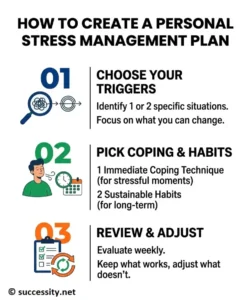
A useful stress management plan should be simple enough to follow on a difficult day. It should also address the causes of your stress, not just the symptoms.
You can start by answering three questions: What is causing the most pressure? What can I change? What helps me cope when the pressure rises?
Step 1: Choose Your Most Common Stress Triggers
Identify one or two situations that repeatedly leave you feeling overwhelmed.
Be specific. “Work is stressful” is difficult to act on. “I receive new assignments without clear deadlines” gives you something concrete to address.
Separate the parts you can influence from those you cannot. You may be able to organize your tasks differently, ask for clearer instructions, or change how you respond to interruptions. Other circumstances may require help or broader changes.
Step 2: Select One Immediate Coping Technique and Two Sustainable Habits
Choose one technique for stressful moments, such as comfortable breathing, grounding, or a short walk.
Then choose two habits that address your longer-term needs. These might include keeping a consistent sleep schedule, taking regular movement breaks, or setting a clearer boundary around work.
Avoid introducing too many new routines at once. Start with changes you can realistically maintain, then adjust them as you learn what works.
Step 3: Review What Helps and Adjust Your Plan
At the end of each week, take a few minutes to evaluate your progress.
Ask yourself:
- Which situations caused the most stress?
- Which techniques were genuinely helpful?
- Did I address any underlying problems?
- What made the plan difficult to follow?
- What is one adjustment I can make next week?
Do not judge your progress only by whether you felt stressed. Stressful situations will still occur. Look instead at whether you recognize them earlier, respond more constructively, and take practical steps to reduce unnecessary pressure.
When Stress Requires Additional Support
Self-help techniques can be useful, but they are not always enough.
Consider speaking with a healthcare professional or qualified mental health professional if stress persists, becomes difficult to manage, affects your sleep or relationships, or interferes with your ability to carry out everyday responsibilities.
Professional support can help you understand what may be contributing to your symptoms and identify appropriate options. Depending on your circumstances, these may include counseling, psychological therapies, changes to your environment, or other forms of care.
It is also important to distinguish ongoing stress from other concerns. Anxiety and burnout can involve overlapping symptoms, but they are not interchangeable terms and should not be diagnosed from a checklist alone.
If work-related exhaustion is your main concern, read how to deal with burnout for a more focused discussion of persistent work-related exhaustion and recovery.
Seek urgent medical attention for severe or new chest pain, serious difficulty breathing, or other potentially serious symptoms. Do not automatically assume that these symptoms are caused by stress.
Getting help is not a failure to manage stress. It is a practical response when the problem requires more support than self-help alone can provide.
Final Thoughts on Stress Management
Effective stress management is not about remaining calm in every situation. It is about recognizing what you are dealing with, responding in ways that support your well-being, and making changes where possible.
Start small. Practice one technique that helps you handle stressful moments, establish a habit that supports your daily well-being, and address one recurring source of pressure.
Some situations will remain difficult, and progress will not always be consistent. What matters is developing a more realistic and supportive way to respond to challenges.
You do not have to solve every problem today. Choose one manageable next step and build from there.
Frequently Asked Questions About Stress Management
What Are the Most Effective Stress Management Techniques?
Useful techniques include comfortable breathing, physical activity, mindfulness, problem-solving, relaxation exercises, and setting boundaries. The most appropriate approach depends on your stressors, preferences, and circumstances.
How Can I Manage Stress Quickly During a Busy Day?
Pause briefly, relax your shoulders, breathe comfortably, or take a short walk if possible. Then identify the next manageable action instead of trying to solve every problem at once.
What Is the Difference Between Stress and Anxiety?
Stress is often a response to a demand or external pressure, while anxiety involves worry, apprehension, or fear that may persist even when an immediate stressor is absent. The experiences can overlap, and persistent symptoms may warrant professional assessment.
What Should I Do If Stress Is Affecting My Sleep or Daily Life?
Review the demands contributing to your stress and try practical changes to your routines or responsibilities. If the problem persists, worsens, or interferes with daily functioning, speak with a healthcare or mental health professional.
Can Stress Be Managed Without Medication?
Many people use approaches such as relaxation, exercise, problem-solving, and counseling to manage stress. Medication is not necessary for every person, but treatment decisions depend on individual circumstances and should be discussed with an appropriate healthcare professional when needed.
About the Author