Sophia

Have you ever had a stressful day, felt lonely, or become overwhelmed by your responsibilities and found yourself reaching for food even though you were not physically hungry?
Perhaps you opened a bag of chips while watching television or reached for chocolate after a difficult conversation. The food may have provided temporary comfort, but afterward, you might have wondered why you ate when you did not really want to.
This experience is often called emotional eating. It happens when you turn to food in response to feelings such as stress, sadness, boredom, or loneliness rather than primarily in response to physical hunger.
Emotional eating is a common human experience, and it does not mean you lack discipline. However, if food becomes your main way of managing difficult emotions, it can be helpful to develop additional coping strategies.
Learning how to stop emotional eating starts with understanding your triggers, recognizing your needs, and building a more supportive relationship with food.
In this guide, you will discover seven practical strategies to help you manage emotional eating, respond to cravings more intentionally, and know when additional support may be beneficial.
What Is Emotional Eating?
Emotional eating means eating in response to emotions rather than primarily because of physical hunger. People may use food to seek comfort, reduce stress, distract themselves from difficult feelings, or celebrate positive experiences.
For example, you might crave something sweet after a frustrating day at work or snack repeatedly when you feel bored or isolated.
Food can provide temporary pleasure and comfort. The difficulty arises when eating becomes your main coping mechanism and leaves the underlying emotional need unresolved.
Emotional eating can be influenced by several factors, including:
- Stress: Eating may provide temporary relief when you feel overwhelmed.
- Sadness or loneliness: Food can offer comfort when you need connection or emotional support.
- Boredom: Eating may provide stimulation when you have nothing engaging to do.
- Learned habits: Past experiences may associate particular foods with comfort, rewards, or celebrations.
- Restrictive eating: Skipping meals or following rigid food rules may increase hunger and make eating feel more difficult to manage.
Understanding these influences helps you approach emotional eating with curiosity instead of self-criticism.
Emotional Hunger vs. Physical Hunger
Recognizing the difference between emotional and physical hunger can help you understand what you need in a particular moment. However, the two can overlap, and neither can always be identified by a single sign.
| Physical hunger | Emotional hunger |
|---|---|
| Often develops gradually | May appear suddenly |
| Can be satisfied by different foods | May involve cravings for particular foods |
| Often responds to eating enough food | May persist even after eating |
| Is influenced by your body’s energy needs | May be associated with a particular feeling or situation |
These are general patterns, not strict rules. You can experience physical hunger and emotional distress simultaneously, and craving a particular food does not automatically mean you are eating emotionally.
Instead of judging yourself, ask a few questions:
- When did I last eat, and have I eaten enough today?
- What am I feeling right now?
- Am I looking for food, comfort, distraction, or a combination of these?
- What would help me feel better in this moment?
If you are hungry, eating is an appropriate response. If you are also dealing with a difficult emotion, you can eat and address that emotion separately.
How to Stop Emotional Eating – 7 Practical Strategies
Changing emotional eating patterns takes time. The goal is not to eliminate every craving or prevent yourself from enjoying food. It is to develop more choices so that eating is not your only response to difficult feelings.
1. Identify Your Emotional Eating Triggers

The first step is to recognize when emotional eating tends to happen.
Some people reach for food after work, while others notice stronger urges when they feel lonely, anxious, frustrated, or tired. Your triggers may also vary depending on your environment and daily routine.
For example, you might notice that you rarely snack excessively during busy mornings but frequently eat while watching television late at night.
Rather than assuming you need more willpower, look for patterns that help explain the behavior.
Try keeping a simple emotional eating journal for a few days. Record:
- The situation before the urge to eat.
- The emotion you were experiencing.
- Whether you felt physically hungry.
- What you decided to do.
- How you felt afterward.
There is no need to count every calorie or monitor every bite. The purpose is to understand your behavior, not criticize it.
Once you recognize a recurring trigger, you can plan a more supportive response. If stress after work is a common pattern, for example, you might build a short transition routine into your evening.
2. Pause and Check What You Need
Emotional eating can sometimes happen automatically. You feel uncomfortable, notice food nearby, and begin eating before you have considered what is happening.
Creating a brief pause can help you respond more intentionally.
When you notice an urge, try asking yourself whether you are hungry, stressed, bored, lonely, angry, or tired. You can use the HALT method as a simple reminder to check whether you are hungry, angry, lonely, or tired.
For example, imagine that you have just finished a difficult meeting and immediately want a snack. You might realize that you are frustrated and need a break.
You could step away from your desk, take a few comfortable breaths, or speak with someone you trust before deciding what to do next.
However, a pause should never become a rule that you must follow before allowing yourself to eat. If you are physically hungry, eat. If you are hungry and stressed, you can nourish yourself while also addressing the stress.
The goal is awareness, not restriction.
3. Find Healthier Ways to Cope With Difficult Emotions
If you regularly turn to food for comfort, it can help to develop other ways of meeting your emotional needs.
Different emotions may call for different responses. A strategy that helps when you are bored might not be enough when you feel overwhelmed or lonely.
Consider these examples:
- When you feel stressed: Take a short break, practice comfortable breathing, or divide a difficult task into smaller steps.
- When you feel lonely: Call a friend, arrange a conversation with someone you trust, or participate in an activity that helps you feel connected.
- When you feel bored: Choose an activity that interests you, such as reading, listening to music, gardening, or working on a hobby.
- When you feel frustrated: Write down what is bothering you, identify what you can control, or take time to reflect before responding.
- When you feel exhausted: Consider whether you need rest, a manageable evening routine, or a more consistent sleep schedule.
You do not have to replace every comforting food with another activity. Food can be enjoyable and comforting. The aim is to give yourself additional options rather than relying on eating as your only source of relief.
If stress is a recurring trigger, you may also benefit from exploring practical health and wellness strategies that support your overall well-being.
4. Practice Mindful Eating Without Judging Yourself
Mindful eating involves paying attention to the experience of eating, including taste, texture, satisfaction, and your body’s signals.
It can help you notice habits that might otherwise happen automatically. However, it is not a guaranteed way to eliminate emotional eating, and it should not become another set of rigid rules.
You can begin with a few simple practices:
- Sit down when possible rather than eating automatically while doing other activities.
- Notice the taste, texture, and smell of your food.
- Give yourself permission to enjoy the food you have chosen.
- Check in occasionally to see whether you feel satisfied.
- Notice distracting thoughts or emotions without criticizing yourself.
For example, if you often snack while watching television, try eating a portion on a plate and paying attention to the experience. If you still want more, you can decide whether to have more.
Mindful eating is about becoming more aware of your choices, not forcing yourself to stop eating as soon as possible.
If you want to explore related relaxation practices, you can also read about meditation for mental health.
5. Eat Regularly and Avoid Restrictive Food Rules

One important part of managing emotional eating is making sure that you are eating enough.
Skipping meals, ignoring hunger, or restricting foods you enjoy can leave you feeling intensely hungry and preoccupied with food. This can make it harder to distinguish physical hunger from emotional urges.
Instead of trying to control emotional eating by eating less, focus on developing a consistent and satisfying eating pattern.
Consider these practical steps:
- Eat regular meals and snacks according to your needs.
- Include a variety of foods that help you feel nourished and satisfied.
- Avoid labeling foods as morally good or bad.
- Allow yourself to enjoy foods you like without treating them as rewards or failures.
- Pay attention to whether your eating routine leaves you consistently hungry or unsatisfied.
For instance, if you regularly arrive home extremely hungry because you skipped lunch, planning an adequate lunch or afternoon snack may help you feel more comfortable in the evening.
It is also important to avoid compensating for emotional eating by fasting or severely restricting your food intake the following day. These responses can reinforce an unhelpful cycle of restriction and overeating.
If you experience recurrent episodes of loss of control around food, a qualified health professional can help you find an appropriate approach.
6. Make Your Environment Supportive, Not Restrictive
Your surroundings can influence your eating habits. Food that is readily available, familiar routines, and activities associated with snacking may all affect when and how you eat.
You can make small changes to your environment without banning your favorite foods.
For example:
- Keep satisfying meals and snacks accessible.
- Plan ahead for times when you regularly feel stressed or overwhelmed.
- Create a comfortable place to eat without unnecessary distractions.
- Keep enjoyable activities available for times when you feel bored.
- If you tend to eat automatically while working, take breaks that allow you to recognize when you are hungry and when you need rest.
Imagine that you regularly eat snacks while working late. Rather than removing every snack from your home, you might plan an adequate evening meal, take regular breaks, and keep food available when you are hungry.
The objective is to make intentional choices easier, not to create an environment in which eating feels forbidden.
7. Support Your Well-Being With Sleep, Stress Management, and Self-Compassion
Emotional eating rarely exists in isolation. Stress, fatigue, difficult circumstances, and an inconsistent routine can make it harder to manage emotions.
Although improving these areas will not automatically stop emotional eating, it can support your overall well-being.
Start with manageable changes:
Create a realistic sleep routine. Give yourself enough opportunity to rest and try to maintain a consistent bedtime when practical.
Make time for stress relief. Short walks, relaxing activities, conversations with supportive people, or quiet time may help you manage everyday pressure.
Recognize your emotional needs. If you feel overwhelmed by work or personal responsibilities, consider whether you need rest, practical assistance, clearer boundaries, or professional support.
Practice self-compassion. If you eat in response to an emotion, avoid treating the experience as proof that you have failed.
You can acknowledge what happened without judging yourself. Ask what you were experiencing and what might help next time.
For more guidance on managing persistent worry or anxiety, explore practical mental health tips for managing anxiety.
What to Do After an Emotional Eating Episode
Even when you understand your triggers and practice new coping strategies, you may still experience moments when you eat in response to emotions.
What matters is how you respond afterward.
Guilt and self-criticism can make the experience more distressing. Trying to compensate by skipping meals, fasting, or exercising excessively may also contribute to an unhealthy relationship with food.
Instead, try the following approach.
1. Return to your normal eating routine. Have your next meal or snack when you need it. You do not need to earn food or compensate for what you ate.
2. Reflect without judgment. Consider what happened before the episode. Were you stressed, lonely, physically hungry, or exhausted? Look for useful information rather than reasons to blame yourself.
3. Identify one possible adjustment. If you skipped lunch, you might plan a more satisfying meal the following day. If you were upset after a difficult conversation, you might consider another way to process those feelings.
4. Treat yourself with patience. Changing an established pattern takes practice. One difficult moment does not erase the progress you have made.
5. Seek additional support when needed. If episodes are frequent, distressing, or difficult to manage, you do not have to handle them alone.
The aim is to return to caring for yourself, not to punish yourself for eating.
When to Seek Professional Help for Emotional Eating
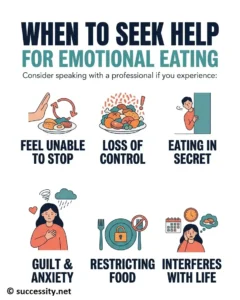
Occasional emotional eating does not automatically indicate an eating disorder. However, it is worth seeking support when eating feels increasingly difficult to control or causes significant distress.
Consider speaking with a qualified healthcare professional if you:
- Frequently feel unable to stop eating once you begin.
- Regularly eat large amounts of food while feeling a loss of control.
- Eat in secret because you feel ashamed or distressed.
- Experience significant guilt, anxiety, or distress about your eating.
- Repeatedly restrict food or use other compensatory behaviors after eating.
- Find that concerns about food interfere with your daily life or well-being.
These experiences do not establish a diagnosis by themselves, but they may indicate that additional assessment would be helpful.
Treatment may include psychological therapy, nutritional support, or other care depending on your needs. You can start by speaking with a healthcare professional who can help you identify an appropriate next step.
If you are struggling with repeated episodes of loss of control, avoid relying on stricter food rules as your primary solution. Support from someone experienced in eating concerns can help you work toward a healthier relationship with food.
Final Thoughts
Learning how to stop emotional eating is not about developing perfect self-control or refusing yourself the foods you enjoy. It is about understanding what drives your behavior and finding supportive ways to respond to both physical and emotional needs.
Start by identifying one recurring trigger. When it appears, check in with yourself, consider what you need, and choose a response that supports your well-being.
Remember that eating is a normal part of life, and seeking comfort through food does not make you weak. If emotional eating becomes distressing or difficult to manage, professional support can help you work toward lasting change.
You do not have to change everything at once. Begin with one small, compassionate step toward a healthier relationship with food.
Frequently Asked Questions About Emotional Eating
Why Do I Eat When I’m Stressed or Sad?
Eating may temporarily provide comfort, pleasure, or distraction when you are experiencing difficult emotions. Over time, you may learn to associate certain situations with eating. Recognizing these patterns can help you develop other ways to manage your emotions while still allowing yourself to enjoy food.
Can You Stop Emotional Eating Without Dieting?
Yes. Restrictive dieting is not a requirement for addressing emotional eating. In fact, strict food rules and inadequate eating can make food-related distress more difficult for some people. A more supportive approach involves eating adequately, identifying emotional triggers, and developing flexible coping strategies.
What Should I Do When I Feel an Emotional Eating Urge?
Start by checking whether you are physically hungry and identifying what you are feeling. If you are hungry, eat. If you are also stressed, bored, or lonely, consider what might help with that emotion. You can pause, choose a coping activity, or eat and address the underlying feeling separately.
Is Emotional Eating the Same as Binge-Eating Disorder?
No. Emotional eating describes eating in response to emotions, whereas binge-eating disorder involves recurrent episodes of eating with a sense of loss of control and significant distress. A healthcare professional can assess your symptoms and determine whether further evaluation or treatment is appropriate.
How Long Does It Take to Stop Emotional Eating?
There is no universal timeline. Progress depends on your circumstances, triggers, eating patterns, and available support. Rather than expecting to eliminate emotional eating within a fixed number of days, focus on recognizing patterns and practicing helpful responses over time.
About the Author